
Wholesale ecommerce website development is the work of building a site where trade buyers can browse, price, order, and reorder products under business terms rather than through a retail checkout. The channel is large: U.S. merchant wholesalers recorded $4,224,095,651,000 in ecommerce sales in 2024, out of $11,026,553,932,000 in total sales, shipments, or revenue. The U.S. Census Bureau counts an order as ecommerce when the buyer places it or negotiates price and terms over the internet, EDI, email, or another online system, and payment does not have to happen online. Many wholesale orders begin as negotiated requests rather than one-click carts, so the site has to support that process.
A trade site usually needs far more than a product grid. Buyer-specific catalogs and pricing, quantity rules and price breaks, purchase-order numbers, net payment terms, and fast repeat ordering shape the build from the start. For a Greensboro project, the tax setup belongs in the plan too. Wholesalers liable for sales or use tax must hold a Certificate of Registration, and resale purchases depend on a Certificate of Exemption, so checkout has to separate exempt and taxable orders correctly. On the rate, Guilford County’s combined general sales and use tax rate is 6.75%. General web-design benchmarks put agency charges anywhere from $2,000 to $100,000, so budgets should be built from your actual feature list rather than from those ranges.
Key Takeaways
- Wholesale ecommerce website development must capture negotiated and purchase-order sales, because the U.S. Census Bureau counts an order as ecommerce when its price and terms are negotiated online, by EDI, or by email, even if payment happens offline.
- A wholesale site needs buyer-specific catalogs and pricing, quantity rules and price breaks, purchase-order numbers, and net payment terms built in from the first planning session rather than added after launch.
- Each trade account’s sales-tax status must be stored in its account record, and a Greensboro project should test a sample exempt order, a taxable order, and a mixed order before launch, since Guilford County’s combined general sales and use tax rate is 6.75%.
- A wholesale business should rank its required trade features by how often buyers use them and connect its ERP and inventory systems before comparing platforms, so that online orders reduce stock and post to the ledger without staff re-keying them.
- A wholesale project budget should be built from the actual feature list hour by hour, because general web-design benchmarks of $2,000 to $100,000 and an average verified-review project cost of about $38,105 are not wholesale quotes.
What Wholesale Ecommerce Website Development Really Covers
Wholesale ecommerce website development means building a site where trade buyers browse, price, order, and reorder products at business terms rather than through a retail checkout. The buyer is usually a retailer, distributor, or contractor purchasing in volume to resell or use, so the site must recognize who is signed in and what that account is allowed to see, pay, and order.
A retail store can show one price to everyone and let any shopper check out with a card. A trade site often hides wholesale pricing until a buyer signs in, applies account-specific prices, enforces minimum order quantities or case packs, and offers a quote request when a deal needs negotiation. Each rule changes the cart, the checkout, and the order record, so it belongs in the design from the first planning session.
Wholesale is one part of business-to-business (B2B) selling. B2B covers any sale between companies, including software subscriptions, professional services, and parts a manufacturer buys for its own production. Wholesale narrows that to companies buying physical goods in bulk, usually to resell them. A wholesale site is therefore a B2B site built around a product catalog, bulk quantities, and restocking.
The national measure explains why the channel matters to a builder. An order counts as ecommerce when it is placed or its price and terms are negotiated online, by email, or through EDI, so a wholesale order that starts as an emailed spreadsheet or a purchase-order upload still counts. Your site should capture negotiated and purchase-order sales, not only paid carts.
Trade Features to Plan Before Choosing a Platform

Start by listing the features your buyers will use, then rank them by how often each one comes up in a normal order. That ranking separates required capabilities from nice-to-have ones, so the build scope, not a platform’s marketing list, should decide which platforms are worth comparing.
- Bulk ordering and quick order entry, so a returning buyer can enter SKUs and quantities from a saved list
- Custom pricing and volume discounts tied to buyer groups or order size
- Minimum order quantities and case-pack rules set separately for each product
- Net payment terms and purchase-order numbers captured at checkout
- ERP, CRM, and inventory integrations so trade orders update stock and accounting
- User roles for buyer team members, approvers, and sales reps
- Mobile ordering for reorders placed from a phone or tablet
Quick order entry matters most for accounts that buy the same fittings or cases every month. Those buyers should not have to search the full catalog each time.
Pricing rules need a clear owner. A distributor and a retailer may pay different prices for the same item, and a volume break should apply automatically at the cart, not through a manual invoice edit.
Integrations determine whether the site becomes a sales channel or a second order desk. If an online order does not reduce stock or post to your ledger, staff must re-key it, and mistakes grow with volume. Name the system that holds stock levels and customer records before you compare platforms.
Approval roles let a manager sign off on a buyer’s purchase order, and sales reps need to place orders on behalf of the accounts they manage. Test mobile ordering through the real reorder path, not just a responsive homepage.
Finally, plan for growth. Dig Designs SEO plans start at $497 per month for one blog post and one optimized page, and include Google Analytics, Google Search Console, and Google Tag Manager setup, a website audit, and monthly reports.
Taxes, Payment Security, and Budget for a Greensboro Launch
Taxes shape the build before any product goes live. A North Carolina retailer or wholesaler that is liable for sales or use tax must obtain a Certificate of Registration, and that registration determines which orders your checkout must tax.
Buyers who purchase goods for resale can present a Certificate of Exemption or use a direct pay permit, so the account record should store each buyer’s status. A buyer who uses the goods rather than reselling them must pay use tax, which means one checkout rule cannot cover every trade account. Test a sample exempt order, a taxable order, and a mixed order before launch, because a checkout that applies the wrong local rate misstates every invoice it produces.
Payment security is also a fixed target. The PCI Security Standards Council reports that PCI DSS v4.0.1 kept the March 31, 2025 effective date for future-dated requirements and added or deleted no requirements, so a build planned now should be checked against the v4.0.1 text.
Accessibility belongs in the same review. The U.S. Department of Justice says businesses open to the public must meet the ADA’s nondiscrimination and effective-communication requirements for online goods and services, and it cites color contrast, text alternatives for images, captions, labeled forms, and keyboard navigation as practices that improve access. A buyer reordering with a keyboard should be able to finish the order.
General web-design benchmarks put agency work at typically $2,000 to $100,000, with shortlisted firms often charging $100 to $149 per hour, and the average verified-review project costing about $38,105, with most reviewed projects lasting about seven months. Those figures are not wholesale quotes, so price your feature list hour by hour. Ongoing care is a separate line item. Our $97 per month Website Management plan for WooCommerce and eCommerce sites includes 50 GB of storage, 500 GB of bandwidth, three thirty-minute tasks a month, daily off-site backups, daily malware and vulnerability scanning, and a free SSL certificate.
Shopify: Hosted Store With Built-In Wholesale Tools

Shopify is a hosted platform that runs products, orders, checkout, payments, and integrations for your store, so you avoid managing your own servers. Its native B2B tools let one store sell to wholesale buyers and to direct-to-consumer shoppers at the same time. Company profiles can group several buyers and locations, each with its own payment terms, tax exemptions, and customer-specific catalogs. Buyers can enter quantities through product or order-form lists, and volume price breaks and quantity rules apply at the cart.
Several features suit trade ordering. Net payment terms, purchase-order numbers, self-service ordering, and easy reorders cover the most common account routines. Orders can also be routed to draft orders for review and approval, which supports quote-style negotiation before anything ships. For back-office work, Shopify B2B connects to NetSuite, Microsoft Dynamics 365 Business Central, and Acumatica, and it supports iPaaS tools and custom APIs. On April 2, 2026, Shopify announced that foundational features, including company profiles, up to three custom catalogs, volume discounts, quantity rules, vaulted credit cards, and payment terms, would extend to non-Plus plans.
US pricing page lists annual-billing rates of $29 per month for Basic, $79 for Grow, and $299 for Advanced, with Plus starting at $2,300 per month. Deposits, partial payments, and unlimited catalogs remain Plus features. Costs can grow beyond the subscription, because some third-party apps may not handle B2B company and catalog data correctly, custom API integrations take more resources, and app fees add up.
At a glance
- Best for: small and mid-sized wholesalers selling to trade buyers and direct-to-consumer shoppers from one store
- Pricing: $29, $79, and $299 per month for Basic, Grow, and Advanced on annual billing, with Plus from $2,300 per month (US rates)
- Free Plan or Trial: Three-day free trial, followed by $1 per month for three months
- Hosting: Secure commerce hosting, unlimited bandwidth, and a free TLS/SSL certificate for connected domains
- B2B Features: Company profiles, custom catalogs, volume discounts, quantity rules, net payment terms, and purchase-order numbers
- Integrations: NetSuite, Microsoft Dynamics 365 Business Central, Acumatica, iPaaS tools, and custom APIs
Shopify Plus: Enterprise Shopify for Complex Wholesale Operations
Shopify Plus is Shopify’s hosted platform for larger, growing businesses that want to run wholesale and direct-to-consumer sales from one system. Merchants can sell wholesale from their main store or from a separate B2B store, with company accounts, multiple buyers and locations, and customer-specific catalogs managed in the Shopify admin. That structure suits a business that wants trade buyers to sign in to private pricing while retail shoppers use the public storefront.
The Plus-only options set it apart from the standard plans. Shopify Plus supports unlimited B2B catalogs assigned directly to companies or company locations, while Basic, Grow, and Advanced allow up to three active catalog assignments. Deposits and partial payments are also reserved for Plus. Buyers can use quick order lists to add several product variants at once, and merchants can set volume price breaks and minimum, maximum, or increment-based quantity rules. Negotiated deals can be handled through draft orders that staff review and change before the customer pays.
Plus also connects to ERP, CRM, and inventory systems through direct integrations, iPaaS providers, or custom APIs. Custom APIs require more resources, so Shopify recommends technical help for setup. The drawbacks are real. A TrustRadius reviewer found that some customer-group personalization and stacked-discount scenarios needed backend coding or an app, and paid apps added cost on top of the subscription.
At a glance
- Best for: Complex, growing businesses managing wholesale and direct-to-consumer sales from one system
- Pricing: Starts at $2,300 USD per month on Shopify’s current pricing page
- Free Plan or Trial: Eligible merchants can take a paid trial of one to two months at $399 USD per month
- Hosting: Secure hosting, unlimited bandwidth, and a free SSL certificate included
- B2B Features: Unlimited catalogs, quick order lists, volume price breaks, quantity rules, and net payment terms
- Integrations: ERP, CRM, and other systems through direct integrations, iPaaS providers, or custom APIs
WooCommerce: Open-Source Wholesale on WordPress

WooCommerce is a free, open-source ecommerce plugin that runs on WordPress, and you choose the hosting provider. One store can sell retail and wholesale side by side, which suits a wholesaler that already has a WordPress site and wants full control over its SEO, design, and integrations. Customer-specific pricing, quote requests, and company accounts usually come through extensions rather than the free core.
Those extensions cover most trade needs. The B2B Pricing extension handles customer-group pricing, quantity-based discounts, tax exemptions, hidden prices, and pricing rules for products or categories. Another extension adds quote requests, price lists, quick ordering, and minimum and maximum order rules. Its Companies module supports multiple company users with assigned roles, shared carts, order approvals, purchase limits, and company credit tracking. For larger operations, prebuilt or custom connectors link ERP, CRM, and PIM systems, with NetSuite, Salesforce, HubSpot, and Akeneo named as examples.
The trade-off is that you carry the upkeep. Extensions add cost, with WooCommerce’s pricing page estimating $29 to $299 per year for each one and hosting at $25 to $350 per month for most stores. Someone must arrange hosting, apply security updates, and handle technical maintenance, and WPBeginner notes that advanced features may require paid extensions. Dig Designs builds WordPress sites and can cover that upkeep with weekly plugin and theme updates on its $97 per month WooCommerce plan.
At a glance
- Best for: small and mid-sized businesses that want full control of a WordPress store, from small side businesses to enterprises
- Pricing: the core is free with no monthly subscription; hosting is estimated at $25 to $350 per month for most stores, and extensions at $29 to $299 per year each
- Free Plan or Trial: the core is free to download and use, with no monthly subscription
- Hosting: chosen by the merchant, from managed WordPress services to enterprise-grade hosting
- B2B Features: customer-group pricing, quote requests, company accounts with roles and order approvals, and credit tracking through extensions
B2BKing: WooCommerce Plugin for Wholesale Features
B2BKing is a WordPress plugin that adds wholesale and B2B selling features to an existing WooCommerce store. It is not a standalone hosted platform. Merchants can run a wholesale-only shop, a hybrid B2B and B2C store, or a private-membership store. Trade buyers get a bulk order form with SKU search and CSV quick orders, while merchants set customer-group or individual-user prices, quantity-based tiered prices, minimum orders, and product visibility.
The developer positions the plugin as a cost-effective alternative to enterprise B2B platforms for small and mid-sized businesses, distributors, and manufacturers. Its standout features include quote requests and offers, invoice and purchase-order payment gateways, multiple buyers per company account, and company order approval for employee orders. For ERP connections, the developer says WooCommerce-to-ERP integrations can also work with it.
The trade-offs are practical. The store owner supplies the website and hosting, and the developer notes that logged-in buyers’ customer-specific pages need careful caching to avoid showing incorrect prices, so hosting and maintenance must be planned separately. A WP Mayor review reports that some settings can feel overwhelming at first, despite extensive documentation. The paid official B2BKing site lists the Startup plan at an introductory annual price of $199 for one website, with renewals at $299.50 and a 14-day money-back guarantee.
At a glance
- Best for: Small and mid-sized wholesalers, distributors, and manufacturers adding trade ordering to WooCommerce
- Pricing: $199 introductory annual price for one website; renewals at $299.50 for the Startup plan
- Free Plan or Trial: A free plugin is available on WordPress.org; the paid plan carries a 14-day money-back guarantee
- Hosting: Not included; the store needs WooCommerce-compatible hosting
- B2B Features: Quote requests, purchase-order payment gateways, multi-buyer company accounts, and order approval
- Integrations: WooCommerce-to-ERP connections through standard WordPress and WooCommerce APIs
BigCommerce B2B Edition: Scalable Cloud Platform for Wholesalers

BigCommerce’s B2B Edition adds wholesale and business-buyer tools to BigCommerce’s hosted ecommerce platform, so one site can run retail and trade sales together. Customer groups and price lists tailor product access, prices, discounts, and reordering to each wholesale account. Buyers manage company accounts, orders, quotes, and invoices through an invoice and payment portal.
The standout features suit companies with several buyers. Company buyers can hold roles such as Junior Buyer, Senior Buyer, and Admin, and shared shopping lists let a team reorder the same items. Sales reps can build quotes, while purchase-order options and company-level payment settings control how each account pays. The company-credit setting caps spending per order and does not act as a running credit balance.
Pricing is the main budgeting question. The B2B Edition listing gives no public subscription amount, directs merchants to BigCommerce for custom pricing, and describes the edition as extending the Enterprise plan. BigCommerce’s standard plans list annual-billing prices starting at $29 per month for Core, while Performance starts at $1,499 per month.
Connecting an ERP or CRM can take extra work. BigCommerce says ERP connections can use marketplace connectors, APIs, or integration platforms, but customized ERP workflows may need added configuration or development, and CRM connections are not specific to B2B Edition out of the box. TechRadar says the editor is less convenient for simple design changes and styling than some competing builders.
At a glance
- Best for: wholesalers that want retail and trade sales on one hosted site, with company accounts and sales-rep quoting
- Pricing: custom pricing with no public subscription amount; the edition extends the Enterprise plan
- Free Plan or Trial: a 15-day free trial that does not require a credit card
- Hosting: hosted by BigCommerce, which handles hosting, security, and updates automatically
- B2B Features: buyer roles, shared shopping lists, sales-rep quoting, purchase-order options, company-specific pricing, and an invoice and payment portal
- Integrations: ERP and CRM connections through marketplace connectors, APIs, or integration platforms
OroCommerce: B2B-First Platform for Manufacturers and Distributors
OroCommerce is a B2B-first ecommerce platform built for manufacturers, distributors, and wholesalers, so business buying workflows come first rather than being added to a retail store later. Buyers can see account-specific catalogs and prices, request quotes through built-in RFQ forms, place quick or repeat orders, and view quotes and purchase history in a customer dashboard. Corporate account management, custom pricing, and configurable workflows let a wholesaler match the approval steps its trade customers already use.
Its standout strength is keeping B2B commerce and integrations in one platform. OroCommerce provides APIs for connecting ERP, PIM, and WMS systems. Gartner describes the platform as aimed at manufacturers, wholesalers, and distributors with complex sales processes, including RFQ and CPQ quoting.
The drawbacks are practical. Enterprise pricing depends on the organization’s needs, and a G2 reviewer described initial setup as technically demanding and routine administration as frustrating for non-technical staff. Integration work falls to your internal team or an implementation partner. OroCommerce suits wholesale operations with a meaningful budget and technical resources, not a small business seeking a simple, low-cost store.
At a glance
- Best for: manufacturers, distributors, and wholesalers with complex sales processes and implementation resources
- Pricing: Enterprise pricing is sales-quoted and based primarily on gross merchandise value and internal admin users; Enterprise plans include 25 admin users and do not charge for buyer accounts
- Free Plan or Trial: Community Edition is free; Enterprise can be tried through a free public demo
- Hosting: OroCloud, your own cloud, or on-premises, with costs depending on the environment and region
- B2B Features: account-specific catalogs and prices, RFQs, quick orders, reorders, and customer dashboards for quotes and purchase history
- Integrations: APIs for ERP, PIM, and WMS systems, handled by your internal team or an implementation partner
OrderCentral: Dealer Portals and Dealer-Specific Ordering
OrderCentral is a Salesforce-based SaaS platform for B2B webshops, dealer portals, quote requests, and headless commerce. It is aimed mainly at manufacturers and at businesses that sell through wholesalers, distributors, or dealers. Its dealer-commerce offering lets you tailor product assortments, prices, and delivery or payment conditions for individual dealers or dealer groups.
The feature list centers on the account relationship. Customer-specific pricing, credit-limit settings, order placement by file upload, and accounts with roles let each dealer see its own terms. ERP integrations connect orders to your back office. The APIs can supply catalogs, product details, and shopping carts to an external system or a custom front end while keeping OrderCentral’s pricing logic. File-upload ordering suits product-heavy catalogs, where buyers already work from spreadsheets.
The platform suits manufacturers and suppliers with a network of dealers more than a single online shop. Prices are quote-based and depend on the subscription type and your customer’s system. OrderCentral handles implementation through partners, and the installation guide requires Salesforce administrators to enable Digital Experiences and prepare user profiles first. Setup may therefore need Salesforce expertise, and the cost and timeline depend on how much of that work your project needs.
At a glance
- Best for: manufacturers and businesses selling through wholesalers, distributors, or dealers
- Pricing: quote-based, depending on subscription type and the customer’s system
- Free Plan or Trial: free trial and online demo available on request, with no trial length published
- B2B Features: customer-specific catalogs, prices, and terms; quote requests; credit limits; file-upload ordering; accounts and roles
- Integrations: ERP integrations and APIs for external systems or custom front ends
Adobe Commerce (Magento): Customizable Suite for Large B2B Stores
Adobe Commerce, formerly known as Magento Commerce, is a customizable ecommerce platform for building and running storefronts that sell to wholesale and other B2B buyers alongside retail customers. Merchants can manage company buyers, customer-specific catalogs and pricing, and bulk ordering from one admin area. Shared catalogs let different companies or customer groups see different prices across one or more websites. Quick Order lets a buyer enter several SKUs or upload a product list file to build an order in one pass.
The B2B tools go beyond pricing. Buyers can negotiate quotes online, and company purchase orders can pass through approval rules, with company users given different roles and permissions. Companies can also buy on account against an assigned credit limit, with deferred payment terms and credit activity tracked in the platform.
Commerce APIs connect the store to external accounting, ERP, CRM, PIM, and marketing-automation systems, but developers need working knowledge of those APIs and their authentication. The platform suits enterprises and growing operations with technical teams, not small businesses looking for a low-cost, low-maintenance store. G2 reviewers flag developer dependence, implementation and maintenance complexity, and substantial licensing, hosting, and development costs. Budget for a developer before you commit.
At a glance
- Best for: enterprise B2B and wholesale businesses with technical teams and complex, growing operations
- Pricing: paid subscription, with licensing, hosting, and development costs that reviewers describe as substantial
- B2B Features: company buyers, shared catalogs, Quick Order, negotiated quotes, purchase approvals, and company credit
- Integrations: accounting, ERP, CRM, PIM, and marketing-automation systems through Commerce APIs
NetSuite SuiteCommerce: Storefront Connected to ERP

NetSuite SuiteCommerce is a cloud-based platform for building B2B and B2C storefronts on one site, with online ordering, customer self-service, and site-management tools. Its main advantage for wholesalers is a native connection to NetSuite ERP, CRM, inventory, and order management, so storefront activity and back-office records draw on the same data.
Wholesale buyers can place bulk and repeat orders, use grid ordering and volume discounts, and request quotes that convert into sales orders. Businesses can set negotiated prices, payment terms, and credit limits for each B2B account, restrict catalogs to approved buyers, and let buyers pay invoices by ACH.
The platform suits growing or multi-location wholesalers that want sales, inventory, and finance in one system, and it is most compelling for businesses already running NetSuite. Its value depends on that wider commitment. NetSuite charges an annual license based on the core platform, optional modules, and user count, plus a one-time implementation fee, and it sells B2B ecommerce as an add-on. Oracle does not publish SuiteCommerce prices. A 2026 implementation-cost guide cites partner-reported starting reference points of about $2,500 per month for SuiteCommerce and $5,000 per month for SuiteCommerce Advanced, but those are not official quotes. Reviews flag a learning curve and implementations that can run longer than expected.
At a glance
- Best for: growing or multi-location wholesalers already using NetSuite or needing one system for ecommerce, inventory, and finance
- Pricing: quote-based, with an annual license, optional modules, and a one-time implementation fee; partner-reported starting references are about $2,500 per month for SuiteCommerce and $5,000 per month for SuiteCommerce Advanced. For current details, see the official B2B page.
- Free Plan or Trial: none listed; the official B2B page offers a free product tour instead
- Hosting: SaaS multi-tenant cloud platform with automatic updates
- Integrations: NetSuite ERP, CRM, inventory, and order systems, common payment gateways, shipping carriers, Google Analytics, and Google Tag Manager
Oracle Commerce: Enterprise Account-Based Storefronts
Oracle Commerce, a hosted platform for building customizable online stores, includes wholesale and account-based B2B storefronts. Businesses can offer account-specific catalogs, negotiated prices, and payment terms, while buyers place orders and request quotes through self-service tools. Oracle also describes checkout options that include invoices and purchase orders, along with quoting and product configuration through Oracle CPQ.
The enterprise features are built for organizations with many people involved in each buying decision. Account contacts can hold buyer, administrator, approver, and address-management roles, and contract and volume-based pricing can cover bulk or tiered purchases. The Quick Order widget lets a shopper enter product names or SKUs with quantities, or import a CSV file of SKU IDs. Customer-data connections link the storefront to ERP systems, which suits large companies with complex approval chains rather than small trade shops that process a few orders a week.
The drawbacks are mainly cost and effort. B2B features are not enabled by default, so the account model has to be configured before buyers can use it, and G2 reviewers describe a steep learning curve, complex setup, and high cost of ownership. Oracle’s April 16, 2026 U.S. price list shows a three-year standard subscription term, with Commerce Standard at $20 per 1,000 page views for the first 20,000 units. Additional Commerce options and consulting services are priced separately, so pricing for a wholesale build should be requested directly from Oracle.
At a glance
- Best for: Large organizations with complex approval chains and account-based buying
- Pricing: Commerce Standard at $20 per 1,000 page views for the first 20,000 units on a three-year standard term, per Oracle’s April 16, 2026 U.S. price list; other options and consulting are priced separately
- Hosting: Oracle Cloud, with testing, staging, and production environments included in the subscription
- B2B Features: Account roles, order approvals, contract and volume pricing, bulk ordering, Quick Order, and self-service quoting
- Integrations: Oracle CPQ, ERP systems, REST APIs, and third-party vendors
PrestaShop: Open-Source Store With Customer Group Pricing
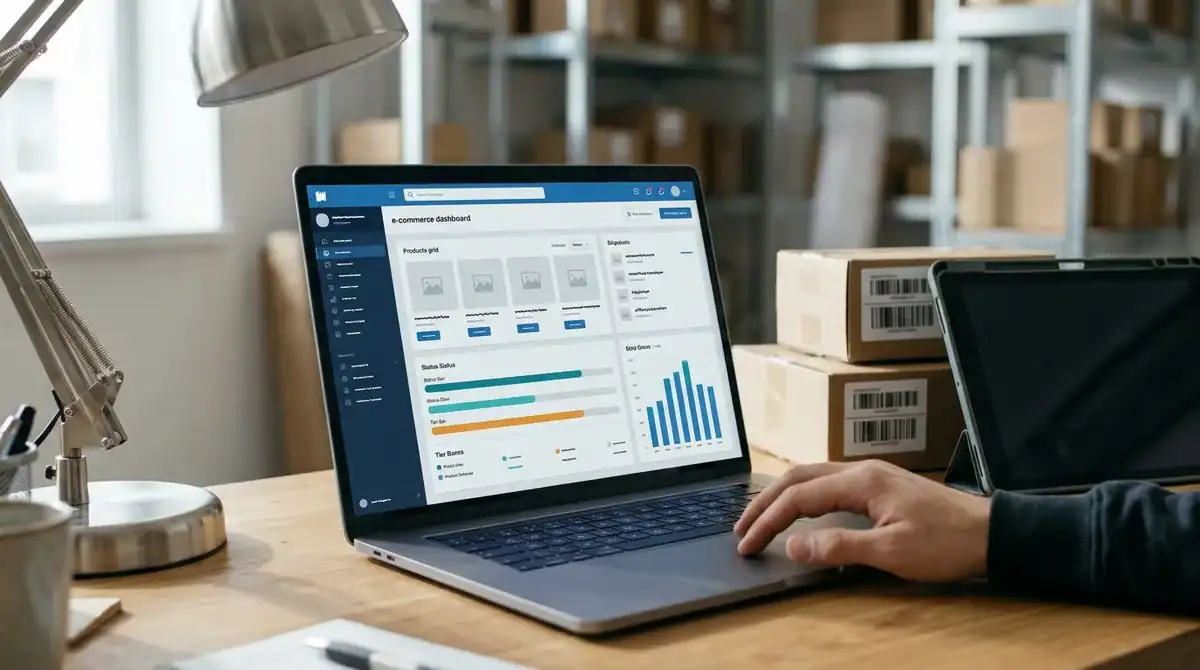
PrestaShop is an open-source ecommerce platform that you can download, modify, and use to build an online store. Its B2B tools cover core wholesale rules. Customer groups can carry different discounts and tax-display settings, and merchants can restrict price visibility for groups such as visitors. Product-specific prices can target one customer or a group and apply only from a set order quantity, which suits negotiated and volume-based pricing.
B2B mode adds company records with an allowed outstanding amount, a maximum number of payment days, and a risk rating, so credit-related settings sit on the customer account. Quote requests and negotiation workflows, however, come through third-party modules rather than a complete built-in feature. ERP and CRM synchronization also usually depends on third-party tools or custom work against the platform’s API.
PrestaShop suits businesses with technical support rather than those wanting a turnkey store. Installing on a server and customizing the store require technical knowledge, while the hosted offer includes installation and hosting. The free Classic download avoids licensing fees, but hosting, a domain, and modules all add cost, and a custom build can add development expenses on top.
At a glance
- Best for: wholesalers with technical support who want a flexible, self-hosted store with customer-group pricing
- Pricing: the Classic download is free and excludes hosting and a domain; the Hosted offer is listed from €24 per month excluding VAT (see the official site for current details)
- Free Plan or Trial: Classic is a free download; the Hosted offer includes a 14-day trial
- Hosting: self-hosted on your own server, or included with the Hosted offer
- B2B Features: customer groups, tailored and quantity-based prices, and company credit limits and payment days
- Integrations: ERP and CRM connections through third-party tools or custom API work
X-Cart: Flexible Open-Source Platform for B2B and B2C
X-Cart is an open-source, API-driven e-commerce platform that can be customized and expanded for multichannel selling. It suits distributors, retailers, resellers, and manufacturers that sell wholesale alongside B2C. Its wholesale pricing supports quantity tiers and customer membership levels, and reusable wholesale profiles let you apply the same tier template across many products.
Phone and email orders can be handled inside the store. Staff create a draft order from a phone or email request, send an invoice, and set payment terms before converting the draft into an active order. X-Cart also offers custom quote management and CPQ for negotiated deals, and CSV bulk editing of inventory data helps larger catalogs stay current.
X-Cart connects to ERP, CRM, and order management systems, and it supports API-based custom connections. Its marketing integrations include Salesforce and Mailchimp. You can host the store on X-Cart’s servers, on a partner’s servers, or elsewhere, and X-Cart’s hosting service can handle backups and technical issues.
The tradeoff is technical effort. Capterra’s X-Cart profile notes that advanced features and backend tasks can require technical skill, and that customization and upgrades can become time-consuming or costly, so the build needs an experienced developer. The Platform starts at $249 per month when annual GMV is no more than $500,000 and no custom features are needed, and custom development is billed on top. A business on a very tight budget may find that cost hard to justify.
At a glance
- Best for: distributors, retailers, resellers, and manufacturers running complex wholesale and B2C operations
- Pricing: from $249 per month for the Platform when annual GMV is no more than $500,000 and no custom features are needed; custom development is extra, and current details are on X-Cart’s official site
- Free Plan or Trial: a free trial is advertised on the Platform page, which does not state its length or eligibility
- Hosting: X-Cart’s servers, a partner’s servers, or elsewhere, with X-Cart’s hosting service available for backups and technical issues
- B2B Features: quantity tiers, membership-level pricing, reusable wholesale profiles, custom quotes and CPQ, and draft orders for phone and email requests
- Integrations: ERP, CRM, and order management systems, API-based custom connections, Salesforce, and Mailchimp
QuickBooks Commerce (Formerly TradeGecko): Wholesale Inventory and Ordering

TradeGecko, later rebranded as QuickBooks Commerce, was a cloud commerce and inventory-management platform for product businesses. Its wholesale tools covered ordering, inventory, purchasing, and sales-channel management. The B2B storefront let trade buyers browse a private catalog and place their own orders at customer-specific prices, with customer-specific price lists, discounts, minimum order quantities, and invited-buyer access.
The platform also supported sales quotes, invoices with due dates based on payment terms, and integrations with online stores and accounting software. Its documented sales-channel connections included Shopify, WooCommerce, Magento, and Amazon, and its accounting sync supported Xero and QuickBooks Online. An Intuit wholesale guide described it as suited to brands and small businesses entering B2B, wholesalers carrying several brands, and manufacturers selling to wholesale buyers.
The drawbacks start with availability. Intuit said standalone QuickBooks Commerce would no longer be available after August 31, 2023, with its e-commerce accounting features moved into QuickBooks Online. Because the product was rebranded and then discontinued, it cannot be the foundation of a new wholesale website. Pricing in a historical review ran from $39 to $799 per month, with data as of March 31, 2020, and that range no longer applies.
At a glance
- Best for: brands, wholesalers, and manufacturers that manage stock across several sales channels
- Pricing: plans from $39 to $799 per month in a historical review, with pricing data as of March 31, 2020
- Free Plan or Trial: a 14-day free trial reported in the historical review, before the standalone product was discontinued
- Hosting: cloud-based platform
- B2B Features: private storefront with customer-specific prices, minimum order quantities, quotes, payment terms, and invoicing
- Integrations: Shopify, WooCommerce, Magento, Amazon, Xero, and QuickBooks Online
Wix: Drag-and-Drop Builder for Simple Wholesale Sales
Wix is a hosted website builder with a drag-and-drop editor, built-in hosting, and no-code tools, so a business can set up a storefront without writing code. The free plan includes hosting and site-building tools, but accepting online payments requires an ecommerce plan.
Wholesale selling runs mainly through the SparkLayer app, described in the Wix Help Center. Wholesale customers can log in, order, and manage their accounts with customer-group pricing, and payment options include Pay on Account, invoice payment, and online card payment. Quote requests are supported, and sales agents can order on behalf of customer accounts. Setup requires unique SKUs, a Members Area, customer labels, and a connected payment method, and custom checkout fields may need a developer working with the API.
The limits matter for trade work. SparkLayer does not support product subscriptions, digital products, Wix coupons, or automatic discounts, and it cannot restrict product visibility by B2B customer group. Wix’s own guidance says wholesale pricing tiers and account-based ordering need configuration, with the B2B layer supplied by App Market apps. Quotes, pricing rules, and approvals therefore depend on add-ons, and Wix’s APIs can sync orders, stock, and customer records with back-office systems when that work is needed.
It is a weaker fit for buyers who need complex account structures or fully integrated procurement. Wix lists its Core plan at $29 per month on annual billing, before tax, and current plan details are on its official site.
At a glance
- Best for: small businesses selling simple wholesale alongside retail from a small catalog
- Pricing: Core at $29 per month on annual billing, before tax, as listed by Wix
- Free Plan or Trial: free plan includes hosting and site-building tools; online payments require an ecommerce plan
- Hosting: built-in hosting
- B2B Features: wholesale login, customer-group pricing, invoice and card payment, quote requests, and sales-agent ordering through SparkLayer
- Integrations: Wix APIs sync orders, stock, and customer records with back-office systems
TradeWheel: B2B Marketplace for Finding Wholesale Buyers

TradeWheel is a global B2B marketplace where businesses publish product listings, search for buyers or suppliers, and communicate about bulk trade. It is not primarily a store builder. Buyers can search products or suppliers and post a request for quotation, and they can message sellers to ask for a better quote, so the platform suits quote-based buying more than fixed trade pricing.
It is oriented toward suppliers and exporters, including smaller businesses seeking international leads. Basic registration is free, and there is no trial account. Paid memberships are billed annually. Premium plans add product showcases, buyer-database access, subaccounts, and an International Sales Manager, but the published feature list names no ERP or CRM integrations and no customer-specific pricing tools.
The limits matter for a wholesaler with its own terms. TradeWheel’s terms state that transactions happen solely between users, and the platform does not process payments, arrange shipping, issue invoices, or verify delivery. Its VIP brochure describes a customized corporate website with hosting, SSL, live chat, and up to six languages, but that is a separate service. It does not replace a branded site where your own account prices, purchase-order numbers, and payment terms run the order.
At a glance
- Best for: suppliers and exporters seeking international buyers, including smaller businesses
- Pricing: premium memberships billed annually at $1,499, $3,999, or $7,999, plus a $499 package limited to certain countries (published rates that change, so the official site lists current figures)
- Free Plan or Trial: free basic registration; no trial account
- B2B Features: product listings, buyer and supplier search, request for quotation, and seller messaging for negotiation
- Hosting: included with the customized corporate website service described in the VIP brochure
Choosing Your Platform and Starting Your Wholesale Build
Start with a one-page brief. List every trade feature from the ranking above, mark which ones a buyer uses on a typical order, and name the system that holds your stock and customer records. Send that brief to two or three platforms and ask each vendor, in writing, how its checkout handles one exempt order, one taxable order, and one mixed order at the Guilford County rate.
If your team already runs NetSuite or Microsoft Dynamics 365 Business Central, give native connections the most weight. If you already have a WordPress site, a WooCommerce build with B2B extensions may fit your budget.
Once you choose a direction, the build itself can move quickly. At Dig Designs in Greensboro, our website launch takes four steps: tell us about your business, choose a site style from our theme catalog, choose any add-on services, and receive your login details within 3 days or less. Our 30-Day Money-Back Guarantee also applies to our website management work.
To talk through your trade feature list with our team, contact Dig Designs, or read our guide to High-Intent B2B Lead Generation Tactics For Modern Professional Services if bringing in new trade buyers is your first priority.
Frequently Asked Questions
1. How long does it take to launch a wholesale website on WordPress compared with a hosted platform?
No fixed launch time applies to either route, because the schedule follows the number of trade features you need. Hosted platforms such as Shopify remove server setup, while a WordPress build with WooCommerce B2B extensions adds time for plugin configuration, customer-group pricing, and caching checks for logged-in buyers. General web-design benchmarks report that most reviewed projects run about seven months, but that figure is not specific to wholesale builds.
2. How do I move an existing retail store to a B2B platform without losing order history or customer data?
Export order history, customer records, and product data from the current store before you begin the migration. Map each retail customer to the correct trade account type, and confirm that the new platform can store the fields you need, such as purchase-order numbers, payment terms, and tax-exemption status. Run a test import with a sample of records, and keep the old store running until the first trade orders complete on the new site.
3. How do I keep a wholesale checkout PCI compliant when buyers pay by card or on net terms?
Reduce how much card data your own systems touch by using a hosted payment method wherever the platform offers one. Net-terms orders that are invoiced and paid by ACH or check do not send card numbers through checkout, but any card option on the same site still falls under PCI DSS. Check the payment setup against the PCI DSS v4.0.1 text, since the Council says that version kept the March 31, 2025 effective date for future-dated requirements.