
Digital environments have shifted from static information hubs to intelligent business engines that drive operational efficiency. In 2026, high-performance custom web portal features are no longer luxury add-ons but essential tools for scaling enterprise workflows. Modern portals leverage a performance-first philosophy to bridge the gap between complex internal data and seamless user experiences. By prioritizing hyper-personalization and robust security, these platforms transform how organizations interact with their global stakeholders.
Users expect an intuitive environment that anticipates their needs and protects their sensitive information. From sophisticated role-based access to predictive AI analytics, the right functional elements ensure that every interaction provides immediate value. Implementing these advanced capabilities allows businesses to streamline self-service tasks and reduce administrative overhead. A well-architected portal serves as a secure, scalable foundation for long-term growth and competitive agility.
Key Takeaways
- High-performance custom portals must utilize Role-Based Access Control and zero-trust architecture to ensure granular security while reducing user cognitive load.
- Integrating AI-driven personalization and predictive analytics transforms portals from static repositories into proactive strategic partners that anticipate user needs and automate decision-making.
- Seamless integration with ERP and CRM systems eliminates data silos, creating a single source of truth that automates complex workflows and improves operational efficiency.
- Automated self-service modules empower users to manage high-level tasks independently, significantly reducing administrative overhead and allowing internal teams to focus on strategic growth.
Role Based Access Control And Identity Management
Modern custom portals distinguish themselves from standard websites through the precision of Role-Based Access Control, ensuring that every user interaction is purposeful and secure. By implementing a zero trust architecture, your portal validates every access request regardless of its origin, protecting sensitive corporate intelligence from internal and external threats. This granular approach allows administrators to define exact permissions for employees, vendors, and clients, meaning a sales representative sees different data than a procurement officer. Such tailored environments reduce cognitive load for users by removing irrelevant tools and information from their dashboard. Investing in these sophisticated access layers transforms a simple login page into a secure gateway for high stakes business operations.
Identity management in 2026 has transitioned to a frictionless experience that balances rigorous security with user convenience. Modern portals utilize single sign on capabilities and multi factor authentication to streamline the entry process while maintaining a defensive posture against unauthorized access. This architectural choice is essential for organizations looking to scale, as it allows for the rapid onboarding of new stakeholders without compromising the integrity of the underlying data. When users feel confident that their personal information and professional workflows are protected, engagement with the portal increases significantly. These features serve as the backbone of a professional digital ecosystem, providing the necessary infrastructure for complex self service workflows and data sharing.
Custom development offers the unique opportunity to build an identity framework that mirrors your specific organizational hierarchy and compliance requirements. Unlike off the shelf solutions that offer rigid permission sets, a bespoke portal evolves alongside your business logic and security protocols. This flexibility ensures that as your team grows or your service offerings expand, your access controls can be adjusted with surgical precision. Professional consultants can map out how these security architectures will facilitate smoother collaboration while isolating sensitive financial or proprietary data. Choosing a custom path ensures that your security measures are a strategic asset rather than a functional bottleneck.
Artificial Intelligence Personalization And Predictive Analytics

Modern custom web portals have transitioned from static repositories into dynamic environments that actively learn from every click and navigation choice. By integrating machine learning algorithms, these platforms analyze user behavior in real time to reconfigure dashboards and prioritize the most relevant tools for each individual. This level of hyper-personalization ensures that a client or employee is never overwhelmed by unnecessary data, as the interface evolves to match their specific workflows. Implementing such intelligent features reduces cognitive load and significantly boosts user engagement by delivering a tailored experience that feels intuitive rather than automated.
Predictive analytics take this customization a step further by anticipating user requirements before a manual request is even made. By evaluating historical interaction patterns and seasonal data trends, the portal can surface critical reports, suggest necessary administrative actions, or highlight potential bottlenecks in a project timeline. This proactive approach transforms the portal from a reactive tool into a strategic partner that guides users toward more efficient decision making. Businesses that leverage these predictive AI analytics gain a competitive edge, as their internal and external stakeholders benefit from a streamlined digital journey that minimizes friction and accelerates productivity.
Selecting the right AI driven features is essential for organizations looking to modernize their digital infrastructure and improve long term scalability. A custom development approach allows for the creation of proprietary models that align perfectly with unique business logic and security requirements. These sophisticated systems do more than just organize information, they provide actionable insights that help leadership teams identify emerging opportunities and operational risks. Investing in a portal equipped with these advanced analytical capabilities ensures that your digital ecosystem remains resilient and responsive to the shifting demands of the modern marketplace.
Seamless Enterprise System And CRM Integration
The true power of a modern custom portal lies in its ability to act as a unified bridge between your external users and your internal operations. By integrating directly with your ERP and CRM systems, a portal eliminates the friction of manual data entry and the risks associated with information silos. Every interaction, from a customer updating their profile to a vendor submitting an invoice, reflects instantly across your entire digital infrastructure. This synchronization ensures that your team always works with a single source of truth, preventing the costly errors that arise from fragmented data.
Investing in deep system integration transforms your portal from a simple interface into a high performance business engine. When your custom portal communicates fluently with your existing software stack, you can automate complex workflows that previously required human intervention. For instance, a client portal can pull real time project statuses or financial statements directly from your back end systems without any additional administrative effort. This level of connectivity not only improves operational efficiency but also provides the transparency that modern users expect from professional digital platforms.
Building these connections requires a strategic approach to API integration benefits and data security to ensure that information flows safely and accurately. Custom development allows for tailored integration logic that matches your specific business rules, something that off the shelf solutions often fail to provide. By prioritizing a seamless flow of data, you provide a sophisticated user experience that feels intuitive and responsive to the user’s needs. Ultimately, these integrated features serve as the backbone of a scalable digital strategy, positioning your organization to handle increased volume without sacrificing data integrity.
Automated Self Service Workflows And Task Modules
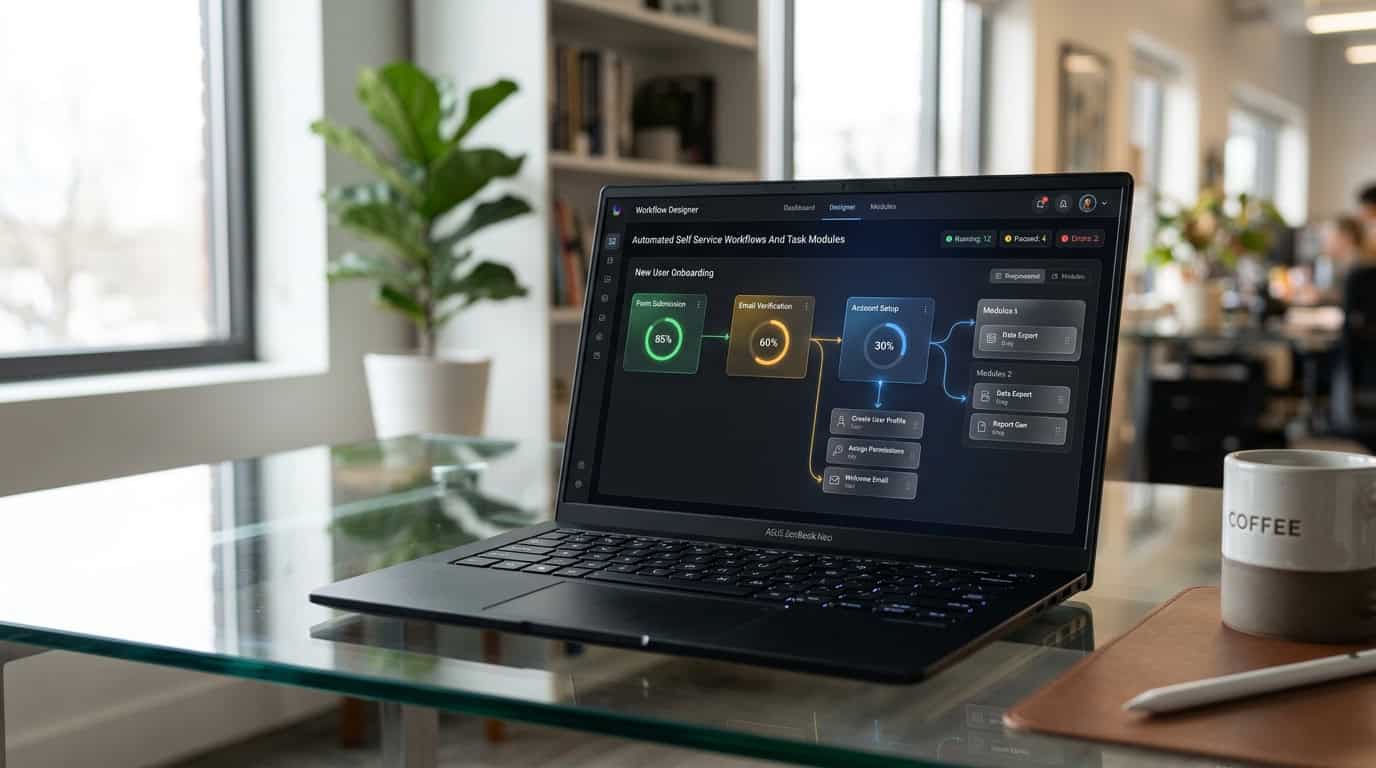
Modern custom web portals have transitioned from static dashboards into dynamic engines that eliminate the friction of manual administrative oversight. By implementing automated self service workflows, businesses can empower users to handle high level tasks like invoice reconciliation and complex record updates without back and forth communication. These modules use intelligent routing to ensure that every action follows the correct business logic, reducing the risk of human error while speeding up processing times. When users can resolve their own requests through a secure, intuitive interface, the operational burden on your internal team drops significantly. This shift allows your staff to focus on high value strategic initiatives rather than repetitive data entry or status updates.
The integration of task modules within a custom portal provides a centralized hub where users can track progress and manage deadlines in real time. These tools are designed with a performance first philosophy, ensuring that even the most data heavy processes remain responsive and user friendly. By utilizing modern B2B portal UX tailored to your specific industry, these workflows can trigger automatic notifications, generate necessary documentation, and update legacy systems simultaneously. This level of synchronization ensures that every stakeholder has access to the most current information without needing to refresh pages or send follow up emails. Ultimately, these automated features turn a simple portal into a sophisticated business tool that drives efficiency and enhances the overall user experience.
Maximizing Business Growth Through Advanced Functionality
Prioritizing the right custom web portal features transforms a digital environment from a static information hub into a high-performance engine for business growth. By integrating role-based access control and AI-driven personalization, companies can provide tailored experiences that meet the specific needs of every stakeholder. These advanced functionalities do more than just simplify navigation, as they actively reduce operational friction and foster deeper user engagement. When a portal anticipates user requirements through predictive workflows, it moves beyond a simple utility to become a strategic asset. Investing in these custom capabilities ensures that your digital infrastructure remains scalable and resilient in an increasingly competitive marketplace.
The transition to a sophisticated portal often requires bridging the gap between aging internal systems and modern, cloud-based interfaces. Successful deployment hinges on the seamless flow of data, ensuring that legacy information is accessible and useful within the new environment. Companies that focus on secure data transitions and API connectivity find themselves better positioned to leverage real-time analytics and automated reporting. This holistic approach to development creates a unified ecosystem where employees and clients can collaborate without technical barriers. Ultimately, the right feature list serves as the foundation for long-term digital maturity and increased return on investment.
To ensure your transition to a high-performance portal is seamless and secure, you may want to consider how professional legacy database migration services can modernize your underlying infrastructure. Expert teams specialize in moving complex data sets into modern environments while maintaining data integrity and performance standards. Discover how professional legacy database migration services can transform your approach to custom web portal features by creating a robust backend that supports next-generation functionality. Taking this step allows your business to shed the limitations of outdated software and embrace a more agile, growth-oriented digital strategy.
Frequently Asked Questions
1. What are the primary benefits of implementing custom web portal features?
Custom portal features transform static interfaces into intelligent engines that drive operational efficiency and scale enterprise workflows. By automating self-service tasks and streamlining data access, you reduce administrative overhead and create a secure foundation for long term digital growth.
2. How does Role-Based Access Control improve security and user experience?
Role-Based Access Control ensures every interaction is purposeful by granting users access only to the specific tools and data they need. This granular approach protects sensitive corporate intelligence while reducing cognitive load for your employees, vendors, and clients.
3. Why is a zero trust architecture important for modern business portals?
A zero trust architecture validates every access request regardless of its origin, providing a robust defense against both internal and external threats. This security model is essential for protecting high stakes business operations and maintaining the integrity of your sensitive data.
4. How does hyper-personalization impact portal engagement?
Hyper-personalization creates an intuitive environment that anticipates user needs and provides immediate value during every interaction. By delivering tailored content and relevant tools, you enhance the user experience and ensure your portal remains a critical asset for global stakeholders.
5. Can custom web portals help in managing complex internal data?
Yes, modern portals act as a bridge between complex internal data systems and seamless user experiences. They leverage a performance first philosophy to organize information effectively, making it accessible and actionable for various user roles across your organization.
6. What role does AI play in the next generation of web portals?
Advanced portals integrate predictive AI analytics to analyze user behavior and automate complex decision making processes. These capabilities allow your business to stay competitive by providing insights that drive agility and more informed strategic choices.