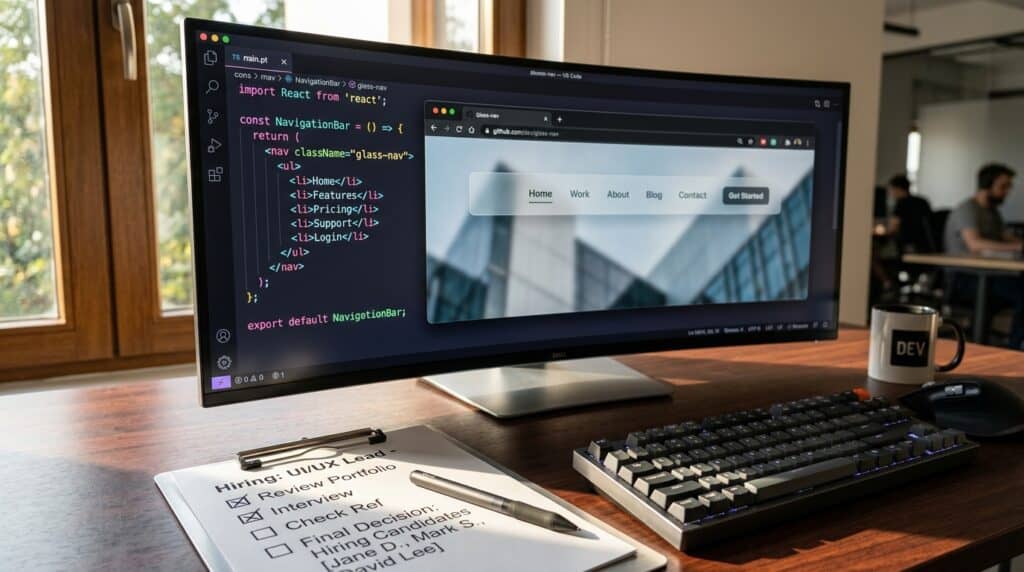
In 2026, the barrier to entry for building web interfaces has shifted from writing syntax to mastering architectural judgment. As AI tools increasingly automate boilerplate and basic component construction, the role of the engineer has evolved into that of a systems thinker who prioritizes performance and accessibility. Navigating this environment requires a specialized hiring frontend developers checklist that moves beyond framework fluency to evaluate how a candidate manages complex data lifecycles and user experience.
The modern developer must now demonstrate a deep understanding of technical mastery that transcends simple coding tasks. Top talent focuses on minimizing layout shifts, optimizing core web vitals, and ensuring every interface is inclusive by design. By refining your evaluation process to target these high-level engineering skills, you ensure your team can build resilient, high-performance applications that stand the test of time.
Key Takeaways
- The role of the frontend engineer has shifted from writing syntax to mastering architectural judgment and systems thinking as AI automates boilerplate tasks.
- Hiring evaluations must prioritize performance engineering, specifically a candidate’s ability to optimize Core Web Vitals and manage complex data lifecycles with tools like React Server Components.
- Technical mastery now requires integrating accessibility and inclusive design as core engineering standards rather than treating them as final compliance checks.
- Effective developers must act as informed pilots of AI tools, demonstrating the critical thinking necessary to audit, refactor, and debug AI-generated code for long-term maintainability.
Essential Technical Mastery And Performance Engineering Standards
Modern frontend excellence in 2026 demands a deep fluency in TypeScript and the latest ECMAScript standards that goes well beyond basic syntax. When augmenting your team, you must prioritize candidates who demonstrate architectural judgment by explaining the trade-offs between specific design patterns and type safety configurations. These engineers should treat state management as a strategic data lifecycle challenge, utilizing tools like Zustand or React Server Components to handle complex caching and synchronization. A high-level developer does not just build functional interfaces, but ensures that every line of code contributes to a scalable and maintainable codebase.
Performance engineering has shifted from a secondary optimization phase to a primary requirement for any high-traffic application. Your hiring checklist must evaluate a candidate’s ability to move the needle on Core Web Vitals, specifically focusing on minimizing Largest Contentful Paint and Cumulative Layout Shift. Expert developers implement advanced strategies like code splitting, lazy loading, and strategic asset delivery to ensure seamless user experiences across all device types. By screening for these performance-centric skills, you ensure your project remains competitive in an era where speed directly correlates with user retention and business conversion.
Technical mastery also involves a proactive commitment to accessibility and inclusive design from the very beginning of the development cycle. Serious candidates view accessibility not as a final compliance check, but as a core engineering standard that informs the DOM structure and keyboard navigation patterns. They should be comfortable auditing their own work for ARIA compliance and ensuring that the UI remains functional for users with diverse needs. Selecting developers who integrate these standards into their daily workflow protects your brand and ensures your digital products are accessible to the widest possible audience.
Evaluating AI Augmented Development And Architectural Judgment

In the current state of frontend development, the ability to utilize AI code editors has become a baseline requirement rather than a niche skill. When evaluating candidates, you must look beyond their ability to generate code snippets and instead focus on their capacity to act as an informed pilot. A skilled developer uses these tools to accelerate boilerplate generation while remaining hyper-vigilant about the quality of the output. Your screening process should include a live coding session where the candidate must use AI to build a feature while narrating their thought process. This reveals whether they truly understand the code being generated or if they are simply accepting suggestions without considering the long term implications for the codebase.
The true differentiator for a high level developer is their architectural judgment when AI generated logic fails or introduces subtle bugs. As state management becomes increasingly complex with server components and real time data flows, developers must possess the critical thinking skills to debug intricate race conditions that AI often overlooks. You should challenge candidates to explain the data lifecycle and potential side effects within an AI generated function. A candidate who can identify why a specific state update might cause an infinite re-render or a memory leak demonstrates the deep systems thinking required for modern enterprise applications. This level of scrutiny ensures you are hiring a professional who controls the technology, rather than one who is led by it.
Integrating AI into the workflow requires a sophisticated understanding of performance and security patterns that automated tools might ignore. When screening for this pillar, ask candidates to refactor AI generated components to meet strict accessibility standards or performance budgets. Their ability to catch inefficient patterns, such as unnecessary prop drilling or bloated third party dependencies, indicates a level of seniority that protects your project from technical debt. By focusing on how a developer critiques and refines AI output, you can identify those who possess the architectural maturity to lead complex UI initiatives. This approach filters for engineers who use automation to enhance their expertise without compromising the structural integrity of your frontend architecture.
Assessing User Experience Accessibility And Design System Integration
Modern frontend recruitment requires a shift toward candidates who treat accessibility as a core architectural requirement rather than an afterthought. When vetting talent for your internal team, prioritize developers who demonstrate a deep mastery of semantic HTML and ARIA roles to ensure screen reader compatibility from day one. A qualified hire must be able to explain how they implement keyboard-first navigation patterns, ensuring that every interactive element is reachable and logical for users with motor impairments. By focusing on these fundamental structures, you ensure your digital products remain compliant with evolving global compliance drivers and inclusive for all users.
Seamless integration into your corporate design system is the second pillar of a high-performing technical hire. You need systems thinkers who understand how to consume and contribute to a shared component library without introducing technical debt or visual inconsistencies. Look for developers who prioritize design tokens and consistent styling patterns, as this facilitates faster scaling across multiple internal departments. Their ability to bridge the gap between static design files and dynamic, responsive code ensures that your brand identity remains cohesive across every touchpoint.
The most effective frontend professionals act as a bridge between high-level user experience goals and the technical constraints of the browser. During the interview process, challenge candidates to describe how they balance complex UI animations with the strict performance budgets required for mobile accessibility. They should possess a collaborative mindset, showing a willingness to work alongside designers to refine components for better usability and reduced layout shifts. Hiring with this focus ensures your team can deliver sophisticated interfaces that are both aesthetically pleasing and technically robust for a diverse user base.
Verifying Practical Evidence Through Live Demos And Portfolios

Reviewing a candidate’s portfolio in 2026 requires looking past the visual aesthetics to examine the underlying architecture and decision making processes. When evaluating live deployments, prioritize stability and performance metrics over simple UI transitions or basic component styling. A production ready developer should demonstrate a clear grasp of core web vitals, ensuring that the application remains responsive and accessible across various devices and network speeds. Look for evidence of error handling and state persistence that prevents data loss during unexpected user interactions. By focusing on these functional details, you can identify engineers who prioritize the end user experience and business reliability.
A deep dive into a candidate’s code repositories reveals their ability to maintain clean, scalable code within a collaborative environment. Examine the commit history to see if they follow a logical progression and provide clear documentation for complex architectural choices. High quality repositories should showcase a mastery of TypeScript for type safety and a disciplined approach to modular component design. Pay close attention to how they handle external dependencies and whether they implement automated testing suites to catch regressions. This level of technical rigor ensures that the developer can integrate seamlessly into your existing team without introducing technical debt. To complement your engineering search, you may also want to consult a hiring UX designers checklist to ensure your product vision is supported by world-class design talent.
The final stage of this verification involves a live walkthrough where the candidate explains the rationale behind their technical stack and optimization strategies. Ask specific questions about how they managed data fetching patterns or handled complex state transitions in their featured projects. This conversation should highlight their ability to align technical solutions with specific business objectives, such as reducing load times to increase conversion rates. Candidates who can articulate the trade offs between different frameworks or libraries demonstrate the senior level judgment required for modern frontend roles. This comprehensive review process filters for professionals who are ready to contribute to your project from day one.
Future-Proofing Your Frontend Talent Strategy
Ultimately, securing top-tier frontend talent in 2026 requires a shift from viewing developers as mere coders to recognizing them as strategic architectural assets. By utilizing a modern checklist that prioritizes performance engineering, accessibility, and systems thinking, you ensure that your new hires can handle the complexities of AI-integrated workflows and sophisticated state management. These professionals do more than build interfaces, as they safeguard your digital infrastructure against technical debt and ensure long-term scalability. Investing the time to filter for these high-level competencies allows your team to remain competitive in a rapidly evolving technological environment.
A rigorous hiring process acts as a powerful filter, helping you identify candidates who possess the foresight to build inclusive and high-performing user experiences. As the barrier to entry for basic syntax continues to lower, the true value lies in a developer’s ability to follow compliance standards and optimize for Core Web Vitals. Selecting the right partner or internal hire ensures that your project remains robust, accessible, and ready for future growth. If you are looking to streamline this process or require expert guidance on technical standards, discover how the strategic advantages of fractional CTO services for scaling startups can help you build an elite engineering team.
Frequently Asked Questions
1. What should be the primary focus when hiring frontend developers in 2026?
You must shift your focus from basic syntax and framework fluency to architectural judgment and systems thinking. Prioritize candidates who can demonstrate how they manage complex data lifecycles and optimize for high level performance standards.
2. How do I evaluate a candidate’s technical mastery beyond simple coding tasks?
Look for deep fluency in TypeScript and the latest ECMAScript standards while requiring candidates to explain the trade-offs between specific design patterns. High level talent should treat state management as a strategic challenge using modern tools like React Server Components or Zustand.
3. Why is performance engineering a critical part of the hiring checklist?
Performance is no longer a secondary phase but a primary requirement for resilient applications. You need engineers who proactively optimize Core Web Vitals and minimize layout shifts to ensure a seamless user experience under high traffic conditions. To better understand the market, you can review Nextjs developers cost to align your performance goals with your budget.
4. How has the role of the frontend engineer changed with the rise of AI tools?
As AI automates boilerplate and basic components, the engineer’s role has evolved into that of a systems architect. You should hire developers who provide value through high level decision making, accessibility leadership, and complex problem solving that AI cannot replicate.
5. What specific state management skills should I look for in a modern developer?
Seek out candidates who understand the nuances of caching, synchronization, and data persistence. They should be able to justify their choice of tools based on the specific architectural needs of your application rather than just following popular trends.
6. Why is accessibility considered a high level engineering skill?
Inclusive design is a fundamental requirement for building resilient, professional web interfaces. You must ensure your developers can build applications that are accessible to all users by default, treating it as a core technical standard rather than an afterthought.