
Choosing the right website foundation is a critical decision for any growing business. When weighing HubSpot CMS vs WordPress, you are choosing between two entirely different philosophies of digital growth. WordPress dominates the web with its open-source flexibility, allowing for limitless customization and total ownership over your digital presence. HubSpot has rapidly gained ground as a powerful, all-in-one engine designed to eliminate technical overhead and seamlessly unify marketing, sales, and content strategies.
The ideal platform depends on whether your team values the freedom to modify every line of code or the streamlined efficiency of a fully integrated SaaS ecosystem. Selecting the wrong system can lead to bloated development costs, fragmented customer data, or frustrating technical limitations as your company scales. Understanding the core differences between these two platforms is essential for aligning your website’s technical capabilities with your long-term revenue goals.
Key Takeaways
- WordPress provides unparalleled open-source flexibility and total code ownership, making it ideal for organizations with dedicated developer resources.
- HubSpot CMS operates as an all-in-one SaaS platform that eliminates technical overhead by natively integrating premium hosting, security updates, and CRM tools.
- While WordPress requires third-party plugins and developer intervention for advanced personalization, HubSpot empowers marketing teams with native drag-and-drop autonomy to execute campaigns instantly.
- The hidden costs of managing WordPress infrastructure and security can quickly exceed its free initial setup, whereas HubSpot offers a predictable, fully managed subscription model.
HubSpot SaaS Vs WordPress Open-Source Architecture
The fundamental difference between these platforms lies in their underlying architecture and delivery. WordPress operates as an open-source framework, giving users total ownership and the ability to modify every line of code. This flexibility requires you to secure an external hosting environment to make the website live. In contrast, HubSpot delivers its Content Hub as a proprietary Software as a Service solution. Premium hosting infrastructure is built directly into the platform from the beginning.
Choosing a self-hosted route with WordPress requires a dedicated approach to ongoing technical maintenance. Your development team is responsible for configuring manual SSL certificates, managing complex databases, and ensuring server security protocols remain updated. HubSpot eliminates this technical overhead by providing a closed ecosystem where security and server maintenance are handled automatically. B2B marketing teams can simply log in and focus on creating campaigns rather than worrying about database optimization or software conflicts. Every tool your company needs to grow lives under one unified roof alongside your customer relationship management system.
Choosing between these architectures comes down to your internal resources and long-term growth objectives. Companies with robust technical departments often prefer the customization potential of an open-source framework. However, many modern businesses are shifting toward integrated platforms to streamline operations and reduce dependency on external technical support. Evaluating your current infrastructure and future marketing goals is a crucial first step before committing to a major platform migration. Partnering with experienced web development professionals can help clarify which architecture aligns best with your specific commercial needs.
Marketer Autonomy Vs Developer-Led Content Management
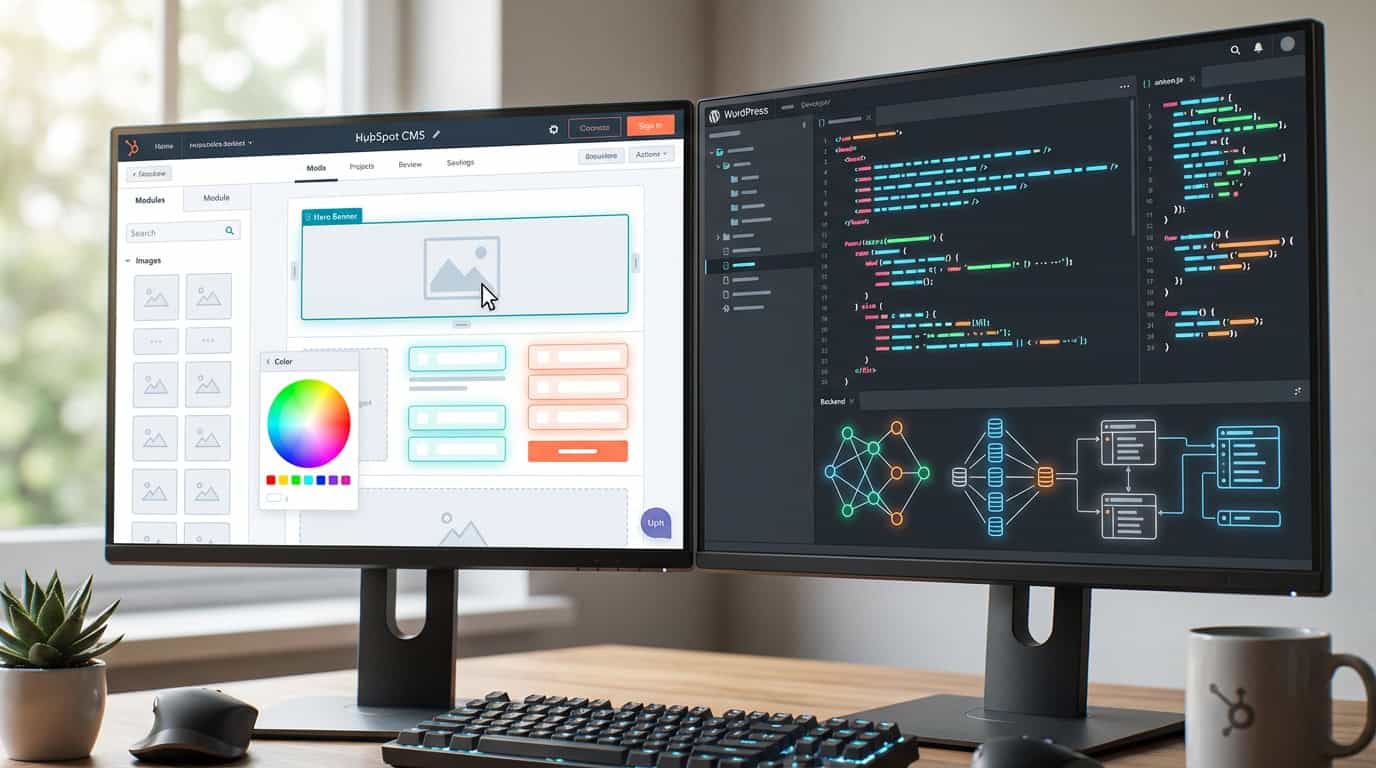
When evaluating content management systems, B2B companies must weigh how much control their marketing teams will have over the website. HubSpot Content Hub is engineered to eliminate technical bottlenecks by providing a native drag-and-drop editor that requires no coding knowledge. This allows marketers to build landing pages, update layouts, and launch campaigns instantly without waiting for a developer to write custom code. Conversely, WordPress operates on a philosophy that prioritizes open-source flexibility but often sacrifices immediate usability. While the platform utilizes the Gutenberg block editor for basic content creation, achieving complex design changes usually demands developer intervention or custom theme modifications.
Beyond basic page building, the true divergence between these platforms lies in their approach to marketing integration and user personalization. Because HubSpot integrates seamlessly with its built-in CRM, marketing teams can create smart content rules that display personalized messaging based on a visitor’s lifecycle stage or past interactions. Everything needed to capture leads and track user behavior is natively built into the ecosystem. WordPress requires a fragmented approach to achieve this level of marketing sophistication. To replicate a personalized, conversion-focused experience, a WordPress site typically relies on a complex web of third-party plugins that must be constantly updated and monitored for compatibility issues.
This choice dictates whether your team spends its time executing growth strategies or managing software updates. A developer-led WordPress environment makes sense for organizations that demand absolute control over every line of code and have the dedicated technical resources to support it. Businesses looking to scale quickly often find that the native marketing autonomy provided by HubSpot delivers a faster return on investment. Deciding which route aligns best with your internal resources is the critical first step before committing to a comprehensive website migration or a new web development project.
Comparing WordPress Hosting Costs With HubSpot Subscriptions
When evaluating website platforms, many B2B buyers initially gravitate toward WordPress because the core software is free to download. However, this open-source model requires companies to piece together their infrastructure by purchasing premium hosting, SSL certificates, and premium themes separately. Beyond these initial setup fees, the true financial drain comes from the hidden technical overhead required to keep the site functioning smoothly. Your internal team or external developers must dedicate billable hours to managing constant plugin updates, database optimizations, and server maintenance. These ongoing administrative tasks can quickly transform a seemingly inexpensive website into a significant monthly expense.
Security vulnerabilities introduce another unpredictable layer of cost for organizations relying on a pieced-together technology stack. Because WordPress relies heavily on third-party plugins, a single outdated extension can expose your corporate website to severe security breaches or catastrophic downtime. HubSpot eliminates this technical anxiety by operating as a fully managed Software as a Service platform with a predictable subscription model. Your monthly fee includes premium hosting, enterprise-grade security patches, a global content delivery network, and automatic software updates handled entirely behind the scenes. This all-in-one approach ensures your marketing and IT teams spend their time driving revenue rather than troubleshooting server errors or resolving plugin conflicts.
Understanding these long-term financial differences is critical for companies planning their digital strategy. While WordPress offers total flexibility for those willing to manage the underlying code, HubSpot provides a growth-first environment where costs remain transparent. Shifting from a high-maintenance open-source setup to a streamlined platform requires careful planning to ensure no data or search rankings are lost. Partnering with experienced web development professionals makes migrating your digital assets seamless and secure. A strategic migration process transforms your website from a technical burden into a powerful, predictable engine for business growth.
Making the Right Choice: HubSpot vs. WordPress
The choice between these two platforms depends on your organization’s internal resources and primary business goals. WordPress offers unparalleled flexibility and total ownership of your digital assets, making it ideal for teams that want complete control over custom code and hosting environments. HubSpot CMS provides a streamlined, all-in-one ecosystem that eliminates technical maintenance while keeping your marketing and sales data tightly integrated. Businesses looking for a hands-off technical experience often gravitate toward HubSpot, whereas those needing highly customized, scalable architectures tend to prefer WordPress. Weighing these core philosophies against your budget and technical capabilities ensures a successful deployment.
Making the right decision now will save your company significant time and money during your upcoming web development project. If your primary focus is rapid marketing execution and seamless CRM alignment without worrying about server updates, HubSpot is likely the stronger candidate. Conversely, if you require complex functionality, specialized plugins, or specific server configurations, WordPress remains the leader in adaptability. Carefully evaluate your long-term growth trajectory and current team expertise before committing to a platform. A poorly planned migration can lead to lost traffic and broken integrations, so consulting with experienced developers provides the clarity needed to move forward confidently.
Transitioning to a new content management system is a major milestone that requires careful planning and expert execution. Whether you choose the open-source freedom of WordPress or the integrated marketing power of HubSpot, having the right technical support makes all the difference. Partnering with experienced web developers ensures your website drives measurable business growth. To learn more about navigating HubSpot CMS vs WordPress, explore comprehensive web development solutions today. The right team is ready to help you build a high-performing digital foundation that perfectly aligns with your corporate objectives.
Frequently Asked Questions
1. What is the main difference between HubSpot CMS and WordPress?
The fundamental difference lies in their architecture. WordPress is an open-source framework offering total ownership and limitless customization. HubSpot is a fully integrated Software as a Service solution designed to unify your marketing, sales, and content strategies in one place.
2. Do I need to purchase separate web hosting for my site?
If you choose WordPress, you must secure your own external hosting environment to make your website live. HubSpot delivers its Content Hub as a proprietary solution with premium hosting infrastructure built directly into the platform. This eliminates the need to manage third-party hosting providers.
3. Which platform gives me more control over my website’s code?
WordPress gives you complete ownership and the freedom to modify every line of code. This open-source flexibility allows for limitless customization to meet your specific technical requirements. HubSpot operates within a closed ecosystem, which limits deep code modification but greatly reduces your technical overhead.
4. How does technical maintenance compare between the two platforms?
Choosing the self-hosted route with WordPress requires a dedicated approach to ongoing maintenance. Your development team is responsible for configuring manual SSL certificates, managing complex databases, and running routine updates. HubSpot handles all technical maintenance, security protocols, and infrastructure updates behind the scenes.
5. Which system is better for integrating marketing and sales data?
HubSpot is designed as a powerful, all-in-one engine that seamlessly unifies your marketing, sales, and customer management. It prevents fragmented customer data by keeping all your tools in a single ecosystem. WordPress requires you to connect third-party plugins and external software to achieve similar integrated functionality.
6. How do development costs differ between HubSpot and WordPress?
Selecting the wrong system can lead to bloated development costs as your company scales. WordPress often requires ongoing developer investment for custom coding, plugin management, and server maintenance. HubSpot typically involves a higher upfront subscription cost but significantly reduces your long-term developer expenses.
7. Which platform is the right choice for my growing business?
The ideal platform depends on your specific priorities and technical resources. If your team values complete architectural freedom and you have developer support, WordPress is an excellent choice. If you prefer streamlined efficiency and a fully integrated ecosystem that eliminates technical setup, HubSpot is the better option.