
The evolution of Python automation pricing has undergone a radical transformation as the industry moves away from simple scripting toward complex, value-based ecosystems. In 2026, the market is no longer defined by basic task automation but by the high-stakes integration of Agentic AI and LLM-powered workflows. Businesses are now navigating a pricing structure where technical specialization in orchestration frameworks or retrieval-augmented generation commands a massive premium over traditional backend development.
Understanding these shifting benchmarks is essential for budgeting in an era where AI specialists often cost 45% more than general developers. Regional variations continue to play a role, but the true cost factor now hinges on the strategic value of autonomous agents and vector database architecture. Companies must balance geographic hourly rates against the efficiency gains provided by advanced intelligence to maximize their return on investment.
Key Takeaways
- The integration of Agentic AI and LLM-powered workflows has created a specialized market where AI experts command a 45% premium over traditional Python developers.
- Project costs are now categorized by complexity, ranging from basic scripts ($500–$1,500) to sophisticated AI-powered autonomous agents that frequently exceed $5,000.
- Geographic location remains a significant price lever, with senior US-based developers charging up to $150 per hour compared to $45–$75 per hour for similar expertise in Southeast Asia.
- Total cost of ownership must account for hidden expenses such as high-performance GPU cloud hosting, API consumption fees, and the ongoing maintenance required to prevent technical debt.
Global Hourly Rates For Python Automation Developers
Navigating the financial aspects of Python automation requires a clear understanding of how geography and expertise influence modern service pricing. In the United States, businesses can expect to pay a premium for local expertise, with senior developers commanding rates between $95 and $150 per hour. Junior developers in the domestic market typically start around $50 per hour, providing a focused entry point for basic scripting and backend maintenance. However, the most significant price driver in 2026 is the emergence of AI specialists who focus on advanced agentic architectures. These experts often bill upwards of $180 per hour because they deliver complex workflows that offer higher long-term ROI than traditional manual processes.
Regional markets like Eastern Europe and Southeast Asia offer competitive alternatives for companies looking to optimize their development budgets without sacrificing technical quality. In Eastern Europe, senior Python architects generally charge between $60 and $90 per hour, offering a balance of high-level engineering skills and lower overhead costs. Southeast Asia remains a highly cost-effective hub, where senior developers are available for $45 to $75 per hour, and specialized AI talent can be secured for roughly $105 per hour. These global benchmarks illustrate a tiered pricing structure where the complexity of the automation task often dictates the necessary investment. Businesses must weigh the benefits of proximity and time zone alignment against the significant cost savings found in offshore talent pools.
The shift toward value-based pricing has made the distinction between general backend work and AI-integrated automation more critical than ever. General Python developers are still essential for maintaining core business logic, but the 30 to 45 percent premium for AI specialists reflects the massive demand for intelligent, self-healing automation systems. When budgeting for custom software projects, it is vital to account for these specialized skill sets, as they directly impact the scalability and efficiency of the final product. Understanding these shifting benchmarks allows stakeholders to build realistic financial models for their digital transformation initiatives. By aligning project requirements with the appropriate regional and technical tiers, organizations can ensure they receive high-quality code at a price point that matches their operational goals.
Project Cost Categories From Scripting To Workflows

Python automation pricing typically begins at the entry level with basic scripting solutions ranging from $500 to $1,500. These projects usually focus on single-purpose tasks such as automated data scraping from a specific website or simple file conversion utilities that save manual labor hours. At this price point, businesses receive a standalone script designed to execute a linear process without complex error handling or external dependencies. While these tools are highly effective for small-scale operational fixes, they generally lack the scalability required for enterprise-level deployment. Investing in these foundational scripts allows companies to prove the return on investment for automation before committing to more expansive infrastructure.
Moving into the mid-tier range, professional multi-step API integrations and workflow automations typically cost between $2,000 and $5,000. These systems go beyond simple scripts by connecting disparate software platforms, such as syncing CRM data with financial tools or automating complex lead generation funnels. This pricing tier reflects the increased technical rigor required to manage authentication, rate limiting, and data transformation across multiple environments. Developers at this level prioritize reliability and security, ensuring that the automation remains stable even when third-party software updates occur. For growing businesses, these integrated workflows represent a significant leap in efficiency by eliminating the need for manual data entry across the entire organization.
The high end of the spectrum involves complex backend systems and AI-powered agents that often exceed $5,000 mark. These advanced projects leverage large language models and vector databases to create intelligent systems capable of autonomous decision-making and natural language processing. Pricing for these implementations accounts for the sophisticated architecture needed to handle high volumes of data and the specialized expertise required for agentic AI frameworks. Such systems provide a robust backbone for enterprise projects, offering a competitive advantage through predictive analytics and automated customer interactions. By investing in this tier of development, companies transition from simple task automation to a fully integrated digital ecosystem that scales effortlessly with their business goals.
The AI Premium And Agentic Automation Costs
The shift toward agentic automation has fundamentally redefined the cost structure of Python development services. While traditional backend scripting remains a staple for simple data migrations, the integration of Large Language Models requires a sophisticated understanding of orchestration frameworks. Businesses are now investing in hiring Python developers who can build autonomous agents capable of reasoning, which naturally commands a premium of 30 percent to 45 percent over standard coding rates. This price increase reflects the specialized knowledge required to manage complex state machines and multi-agent systems. Companies are willing to pay these higher rates because the resulting automation provides a much deeper level of operational efficiency than basic scripts ever could.
The technical complexity involved in implementing Retrieval-Augmented Generation and vector databases is a primary driver of these modern pricing benchmarks. Unlike static automation, AI-integrated systems must handle unstructured data and provide accurate, context-aware responses in real time. Developers must fine-tune embeddings and optimize vector search performance to ensure the system remains reliable and scalable. This level of expertise moves beyond simple logic and into the realm of data science and cognitive architecture. Consequently, the market rate for these specialists has surged as organizations scramble to turn their internal knowledge bases into actionable, automated assets.
Value-based pricing models are increasingly replacing simple hourly billing for high-level Python automation projects. When a developer implements an agentic workflow that replaces dozens of manual hours every week, the return on investment justifies the premium associated with AI specialists. Clients are no longer just paying for lines of code, but for the architectural foresight required to prevent hallucinations and ensure data security within an LLM framework. As we move through 2026, the gap between traditional automation and agentic systems continues to widen in both capability and cost. Investing in this advanced tier of Python development is becoming a strategic necessity for businesses aiming to maintain a competitive edge in automated operations.
Hidden Expenses In Custom Python Backend Development
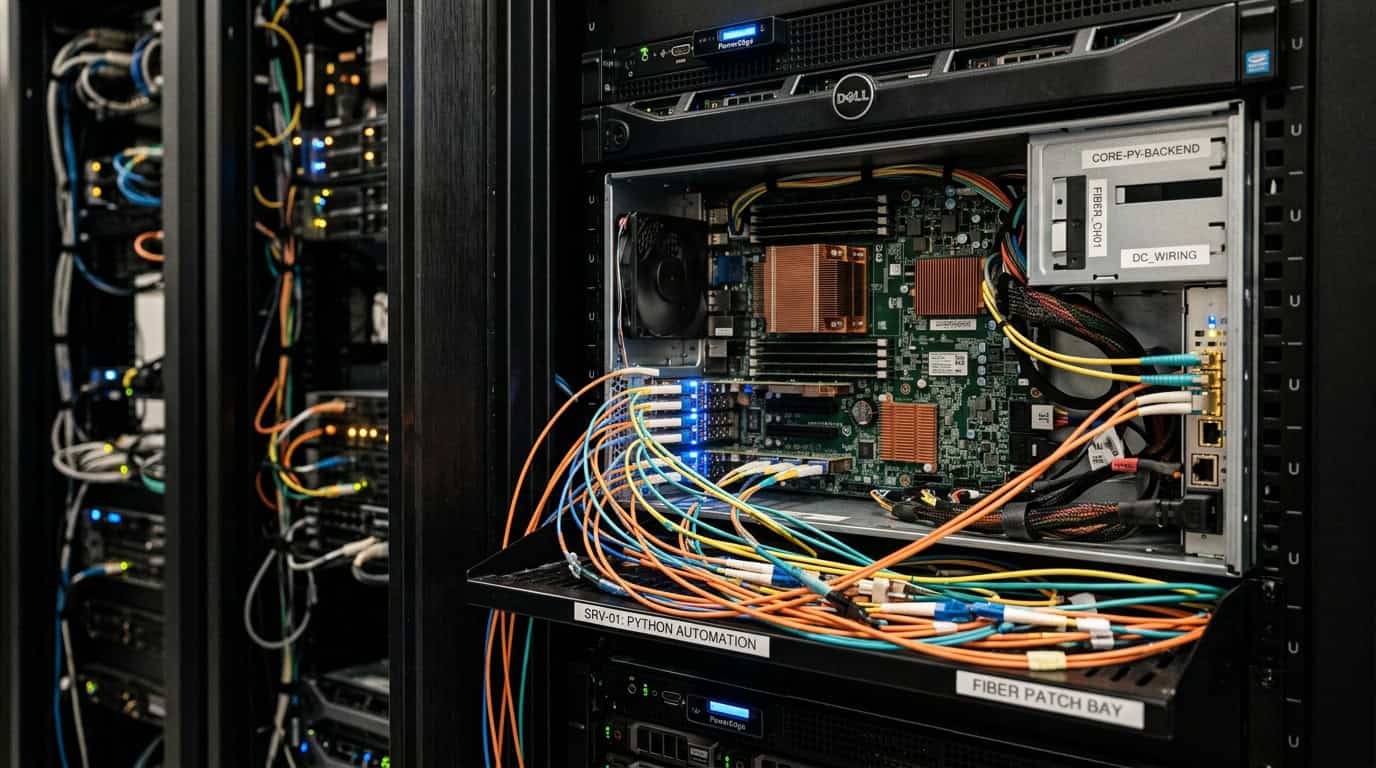
When calculating the total investment for custom Python backend development, businesses often overlook the significant impact of developer burden rates. Beyond the base hourly rate, the true cost includes recruitment, benefits, and the continuous specialized training required to keep pace with rapid advancements in Agentic AI and LLM frameworks. Choosing a US-based senior developer or an AI specialist involves a substantial premium, particularly when integrating complex vector databases or specialized architectures. These labor costs represent the foundation of your budget, but they are only the beginning of the long-term financial commitment. Organizations must account for the specialized skill sets needed to maintain these high-performance systems as technology evolves.
Infrastructure and hosting requirements for automated Python environments introduce a layer of recurring operational expenses that can fluctuate based on usage. Hosting a backend script that leverages large language models requires robust cloud resources, including GPU cloud hosting instances and high-speed data pipelines, which are significantly more expensive than traditional web hosting. API consumption fees for third-party AI models can also scale rapidly, turning a successful automation tool into a major cost center if not monitored closely. Efficient resource management and performance benchmarks are essential to prevent these infrastructure costs from spiraling out of control. Smart architectural decisions early in the development phase can help mitigate these hidden monthly fees.
Maintenance and technical debt represent the final, often invisible, component of Python automation pricing. Custom code requires regular updates to address security vulnerabilities, library deprecations, and changes in third-party API structures. Without a dedicated maintenance plan, a backend system can quickly become obsolete or prone to failure, leading to costly downtime and emergency repair bills. Investing in proactive monitoring and periodic code refactoring ensures the automation remains reliable and continues to deliver a high return on investment. By viewing development as an ongoing lifecycle rather than a one-time purchase, businesses can better manage the total cost of ownership for their custom software.
Maximizing ROI in Modern Python Automation
Navigating Python automation pricing in 2026 requires a strategic focus on value rather than just hourly costs. While the rise of Agentic AI and LLM integration has introduced a radical transformation into the market, the long-term efficiency gains often outweigh the initial investment. Businesses should prioritize custom scripts and backend solutions that address specific operational bottlenecks to ensure a high return on investment. By balancing the technical complexity of modern architectures with a clear budgetary framework, organizations can modernize their workflows without overextending their financial resources. This approach allows for scalable growth where automation acts as a force multiplier for existing human talent.
Achieving a sustainable digital transformation involves more than just writing code, it requires a foundation of robust infrastructure and seamless connectivity. As specialized Python developers focus on high-level AI integration, the underlying systems must be capable of supporting these advanced automated workflows. Selecting the right development partner ensures that your automation logic is not only powerful but also securely integrated into your broader business ecosystem. Whether you are automating repetitive data entry or deploying complex autonomous agents, the goal remains the same: driving efficiency through precision engineering. To learn more about how we can streamline your technical ecosystem, explore our professional services to discover how we can help you achieve your goals.
Frequently Asked Questions
1. What is the current average hourly rate for a senior Python automation developer in the United States?
You should expect to pay between $95 and $150 per hour for a senior developer in the domestic market. If your project requires specialized AI integration, these rates often climb to $180 per hour or more. Junior developers remain a more accessible option for basic scripting with rates starting around $50 per hour.
2. Why are AI specialists more expensive than traditional Python developers?
AI specialists command a premium because they design complex, autonomous agents and vector database architectures that provide significantly higher long-term ROI. You will typically pay about 45% more for these experts compared to general backend developers. Their specialized knowledge in LLM-powered workflows is currently the most significant price driver in the industry.
3. How can I optimize my budget for a Python automation project without sacrificing quality?
You can achieve high technical quality at a lower price point by exploring regional markets like Eastern Europe or Southeast Asia. These regions offer competitive alternatives to domestic rates while still providing the high level of expertise needed for modern automation. Balancing geographic hourly rates against the efficiency of your chosen architecture is the best way to maximize your investment.
4. What is the difference between traditional scripting and modern agentic workflows?
Traditional scripting focuses on simple, linear task automation that requires frequent manual oversight. Modern agentic workflows utilize AI to create autonomous agents that can handle complex decision-making and integrate with your existing data ecosystems. While the initial cost for these advanced systems is higher, they offer far greater strategic value and efficiency.
5. Should I prioritize geographic location or technical specialization when hiring?
Technical specialization should be your primary focus because the strategic value of advanced intelligence often outweighs the savings of lower hourly rates. While regional variations matter, an expert in advanced AI frameworks will deliver a more efficient and scalable product. You must evaluate whether a developer’s specific skill set can provide the autonomous capabilities your business needs to stay competitive.
6. What role do vector databases play in the cost of Python automation?
Vector database architecture is a core component of modern AI workflows and requires specialized knowledge to implement correctly. Because this technology is essential for autonomous agents, developers with these skills charge a significant premium. Investing in this architecture is necessary if you want your automation to handle complex, data-heavy tasks effectively.