
For many enterprises, the “legacy gap” has become a silent thief of innovation, with organizations spending up to 80% of their IT budgets just to keep aging systems on life support. This massive technical debt is no longer just an operational hurdle; it is a barrier to the AI-driven future that modern markets demand. Specialized legacy database migration services have evolved beyond simple technical transfers into essential strategic pivots, enabling companies to bridge the divide between fragile infrastructure and high-performance cloud ecosystems.
As we move into 2026, the shift toward zero-downtime requirements and real-time analytics makes modernization an immediate necessity rather than a distant goal. Leveraging AI-driven automation now allows for the seamless transition of decades-old data into scalable, secure environments without disrupting core business functions. By transforming stagnant data silos into agile assets, organizations can finally stop paying for the past and start investing in the future.
Key Takeaways
- Legacy systems consume up to 80% of IT budgets, creating a ‘legacy gap’ that acts as a financial drain and a primary barrier to AI-driven innovation.
- Modernization must move beyond simple ‘lift and shift’ tactics to strategic replatforming that restructures fragmented schemas and eliminates technical debt.
- AI-driven automation and zero-downtime protocols are essential for translating complex legacy logic and ensuring data parity without disrupting core business operations.
- Transitioning from monolithic architectures to scalable cloud environments is a strategic imperative for organizations to achieve the agility and real-time analytics required by 2026.
Breaking The Cycle Of High Maintenance Costs
Enterprise leaders today face a sobering reality where the vast majority of their IT budget is effectively held hostage by the weight of the past. When eighty percent of financial resources are diverted toward patching twenty year old software and managing spaghetti code, the ability to innovate or integrate modern AI tools becomes a physical impossibility. This “Legacy Gap” creates a cycle of technical debt that compounds annually, forcing organizations to pay a premium for specialized skills just to keep outdated data structures operational. Professional migration services break this cycle by transforming these liabilities into agile assets that no longer drain the bottom line.
The transition from high maintenance to high performance requires a shift away from simple lift and shift tactics toward strategic modernization. By utilizing AI driven automation and zero downtime protocols, businesses can finally dismantle the aging infrastructure that tethers them to inefficient workflows. These services do more than just move data, as they restructure fragmented schemas and clean up decades of technical shortcuts that hinder real time analytics. This process ensures that the focus of the IT department shifts from survival and basic upkeep to driving competitive advantages through new technology.
Investing in a comprehensive migration strategy is a necessity for any established business that intends to remain relevant in an increasingly automated market. Moving beyond the limitations of legacy databases allows for the implementation of cloud native features that provide scalability and significantly lower operational costs. As maintenance overhead drops, the reclaimed budget can be redirected toward growth initiatives and the deployment of advanced data models. This strategic modernization strategy ensures that the organization is no longer just maintaining its history, but is instead actively building its future with a lean and modern foundation.
Transitioning From Monolithic Architectures To Cloud Scalability
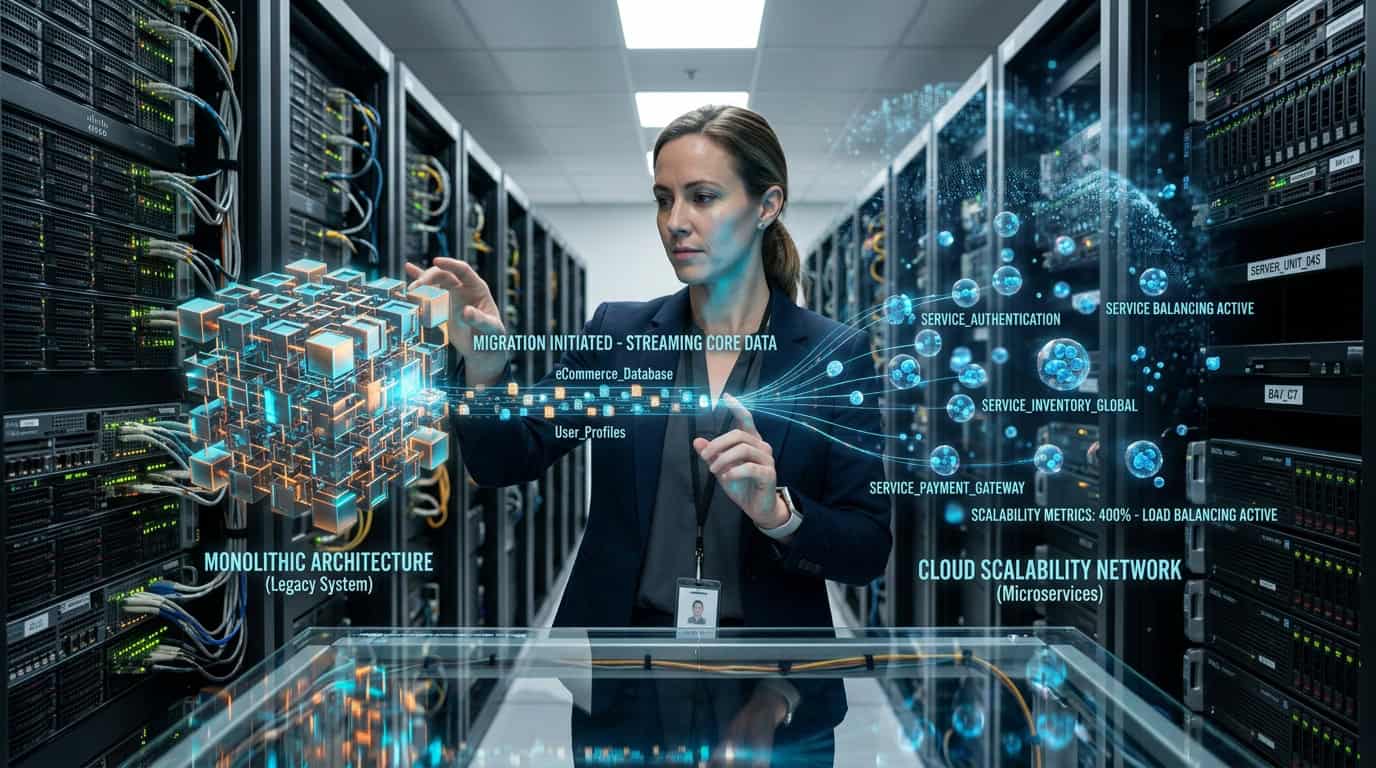
Maintaining outdated monolithic architectures has become a primary barrier for enterprise innovation, often consuming up to 80% of IT budgets just to keep the lights on. These rigid systems create deep technical debt through spaghetti code and siloed data structures that simply cannot support the demands of modern AI or real-time analytics. As organizations reach a breaking point with maintenance costs, legacy database migration services provide the necessary bridge to agile cloud environments. This transition is no longer a luxury but a strategic imperative for businesses that must evolve or risk total obsolescence.
The shift toward cloud scalability represents a fundamental change in how data drives business value, with 67% of modernization deployments now favoring cloud-based architectures. Professional migration services utilize AI-driven automation and zero-downtime strategies to ensure that complex data structures are reorganized without disrupting critical operations. By moving away from on-premise constraints, companies gain the elastic capacity needed to handle fluctuating workloads and integrate advanced machine learning tools. This modernization process effectively turns a liability into a high-performance asset that fuels long-term growth.
Decoupling legacy databases from monolithic applications allows for a more modular approach to infrastructure, enabling teams to deploy updates faster and more reliably. Expert intervention is often required at this stage to navigate the risks associated with data integrity and complex schema conversions. When executed correctly, the migration process eliminates the friction of aging hardware and proprietary lock-ins that hinder digital transformation. Ultimately, transitioning to the cloud empowers established businesses to reclaim their IT budgets for innovation while achieving the scalability required in a data-centric market.
Implementing AI Driven Automation For Data Parity
Modern legacy database migration services have moved beyond manual rewrites by leveraging Large Language Models to decode and translate decades of complex PL/SQL logic. These AI driven tools analyze deeply nested procedures and spaghetti code that often lack documentation, converting them into modern, cloud native formats with surgical precision. By automating the heavy lifting of code translation, organizations can eliminate the human error typically associated with manual refactoring. This approach ensures that business logic remains intact while significantly accelerating the migration timeline. Enterprise leaders can finally address technical debt without the risk of breaking critical downstream applications.
Achieving absolute data parity is a non negotiable requirement for established businesses transitioning away from aging infrastructure. Advanced migration platforms utilize automated validation engines to perform real time comparisons between source and target environments, catching discrepancies before they impact operations. These services facilitate zero downtime transitions by utilizing continuous data replication, allowing the legacy system to remain active until the final cutover. This synchronization ensures that every record and transaction is accounted for, providing a seamless experience for end users. Professional intervention at this level transforms a high risk technical burden into a controlled, strategic evolution.
Modernizing Legacy Infrastructure for Strategic Growth
Transitioning away from outdated data structures is no longer a matter of simple maintenance but a strategic imperative for businesses drowning in technical debt. As enterprises face the reality of spending the majority of their IT budgets on maintaining aging infrastructure, the need for professional intervention becomes a critical survival tactic. Modernizing legacy databases allows organizations to break free from the constraints of spaghetti code and siloed information that hinder innovation. By investing in specialized migration, companies can finally unlock the power of real-time analytics and AI-ready architectures. This transformation ensures that your data remains a competitive asset rather than a liability that slows down your entire operation.
The complexity of shifting from 20 year old systems to high performance cloud environments requires a level of precision that internal teams often cannot provide alone. Professional migration services mitigate the risks of data loss and costly downtime while ensuring that new structures are scalable and secure. This process is about more than just moving data from one location to another; it is about re-engineering your digital foundation to support future growth. Strategic replatforming allows for better connectivity across your entire software ecosystem and eliminates the bottlenecks that frustrate both developers and stakeholders. Embracing this change provides the agility needed to respond to market shifts with confidence and speed.
Building a future-ready infrastructure requires a partner who understands the nuances of complex data transitions and the importance of maintaining integrity throughout the move. If you are ready to eliminate the friction of outdated systems and streamline your digital operations, we are here to guide you through every step. To learn more about how we can facilitate a seamless transition for your organization, explore our Content Migration Service Pricing Guide For Secure Data Replatforming to find the solution that fits your specific needs. Our expert team focuses on minimizing disruption while maximizing the long term value of your data assets. Taking this step now will position your business to lead in an increasingly data-driven global market.
Frequently Asked Questions
1. Why is legacy database migration considered a strategic necessity rather than just a technical update?
Moving away from aging systems is essential because maintaining legacy infrastructure can consume up to 80 percent of your IT budget. Migrating allows you to stop paying for technical debt and redirect those funds into innovation and AI-driven growth.
2. How do you ensure that business operations are not interrupted during the migration process?
We utilize specialized zero-downtime migration strategies and AI-driven automation to transition your data seamlessly. This approach ensures your core business functions remain fully operational while your data moves into a high-performance environment.
3. What are the primary risks of delaying a database modernization project?
Delaying migration leaves your organization trapped in a cycle of high maintenance costs and fragile infrastructure. You risk falling behind competitors who leverage real-time analytics and scalable cloud ecosystems to drive their digital strategy.
4. Can legacy data really be integrated with modern AI and analytics tools?
Yes, professional migration services transform stagnant data silos into agile assets that are compatible with modern AI tools. By moving to a scalable cloud environment, you unlock the ability to perform real-time analytics on decades of historical data.
5. Why is a simple lift and shift approach often insufficient for enterprise needs?
Simple transfers often carry over existing inefficiencies and spaghetti code into the new environment. Strategic modernization identifies and fixes these underlying issues, turning your data into a high-performance asset rather than just moving a liability.
6. How does AI-driven automation improve the migration experience?
Automation speeds up the transition of complex, decades-old data structures while reducing the risk of human error. It allows for a more secure and efficient transfer, ensuring your new environment is ready for the demands of the modern digital market.