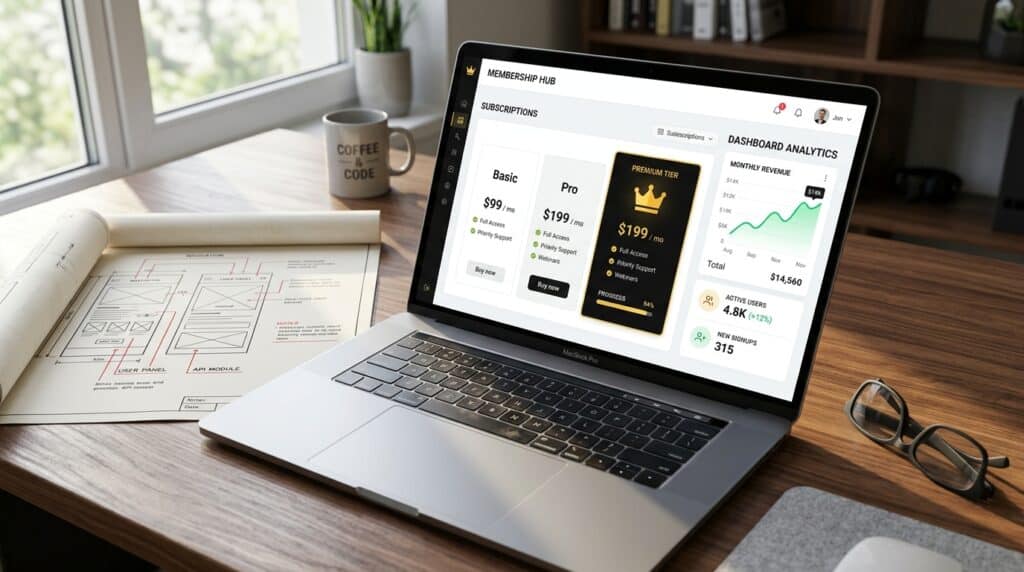
Building a thriving digital community requires a strategic investment, but understanding the true membership website development cost is often the biggest hurdle for growing businesses. In the 2025–2026 period, the price tag can fluctuate based on technical requirements, ranging from a modest $500 for a basic informational portal to over $100,000 for a high-performance, custom-engineered ecosystem. The choice between a rented subscription model and an owned, custom-coded solution dictates long-term scalability and profit margins.
The decision-making process hinges on finding the balance between upfront capital and recurring operational expenses. While standardized platforms offer low entry costs and rapid deployment, they often impose rigid design limits and monthly fees that grow alongside the user base. Conversely, opting for a fully customizable architecture provides total creative control and data ownership, ensuring the platform can evolve as the community matures. Balancing these financial trade-offs is essential for launching a sustainable platform that delivers value to members without draining resources.
Key Takeaways
- Choosing between a SaaS subscription and a custom CMS is a choice between recurring operational expenses on ‘rented land’ and building a high-value capital asset with total data ownership.
- Custom membership platforms typically require a higher upfront investment—ranging from several thousand to over $100,000—but often pay for themselves within 18 months by eliminating per-member scaling fees.
- Sophisticated engineering for tiered content gating, automated recurring billing, and interactive community features is essential for reducing member churn and ensuring long-term platform stability.
- Scalable membership sites require premium infrastructure, such as managed cloud hosting and enterprise-grade security, to maintain performance during high-traffic periods and protect sensitive user data.
Comparing SaaS Subscription Fees Versus Custom CMS Ownership
Choosing between a rented subscription model and a custom CMS ownership model is a pivotal financial decision that dictates long-term profit margins. SaaS solutions offer a low barrier to entry with minimal upfront setup fees, often ranging from nothing to a few hundred dollars, which appeals to businesses needing a rapid launch. However, these platforms operate on a recurring rental model where monthly subscriptions can quickly scale into thousands of dollars as the community grows. While the initial speed is attractive, the business is essentially built on rented land where customization is restricted by the provider’s rigid framework. This path often leads to a ceiling where specialized functionality or unique user experiences become impossible to implement without migrating the entire database.
Investing in a custom WordPress-based membership build represents a shift from operational expenses to a high-value capital asset. While the upfront development costs for a sophisticated community platform can range from several thousand to over thirty thousand dollars, this eliminates the restrictive monthly fees associated with per-member pricing. This ownership model provides total control over the user journey, allowing for specialized lead generation tools and deep integrations that off-the-shelf platforms cannot support. For businesses with established audiences, the higher initial investment often pays for itself within the first eighteen months through saved subscription fees. This creates a scalable, bespoke environment that can evolve alongside a business strategy without being tethered to a third party’s roadmap.
The decision ultimately hinges on whether a business requires a standardized tool or a proprietary engine for growth. High-growth communities often find that the limitations of SaaS platforms become a bottleneck for advanced monetization strategies and data ownership. By opting for a custom CMS build, a business secures the intellectual property of the platform and ensures that the technical infrastructure can handle complex membership tiers or custom API connections. This strategic approach transforms a website from a simple informational portal into a robust community asset that increases the overall valuation of the business. While the initial price tag is higher, the long-term flexibility and lack of recurring platform fees provide a superior return on investment for serious community leaders.
Core Features Influencing Total Membership Platform Investment

Building a high-performing membership platform requires a strategic investment in tiered content gating and sophisticated access control mechanisms. Developers must engineer secure logic that validates user permissions in real time to ensure premium materials remain protected behind paywalls. This complexity increases as multiple membership levels are added, each requiring unique redirection rules and automated expiration triggers. The hours required to map these user journeys and secure the database against unauthorized access represent a significant portion of the initial development budget.
Reliable revenue generation depends on the seamless integration of automated recurring billing and subscription management systems. Unlike a simple one-time purchase, membership sites require robust payment architectures that handle prorated upgrades, failed payment retries, and automated tax calculations across different regions. Implementing these financial workflows ensures that the business maintains steady cash flow without manual intervention. Because these systems must be PCI compliant and highly secure, the specialized engineering involved naturally drives up the final project cost compared to a standard brochure website.
Creating private messaging systems, member profiles, and activity feeds requires extensive backend architecture to handle high volumes of user-generated content. These social functionalities demand rigorous testing to ensure fast load times and mobile responsiveness across all devices. For businesses outgrowing basic platforms, investing in these custom engagement tools and strategic UX design is essential for reducing churn and building a sustainable, scalable digital community.
Hidden Infrastructure Expenses For Scaling Member Communities
Scaling a membership platform beyond a basic brochure site requires a robust hosting environment capable of handling concurrent user sessions and high database demand. Standard shared hosting often fails when dozens of members log in simultaneously to access video content or participate in live forums. Businesses should expect to invest in managed cloud hosting or virtual private servers that offer dedicated resources and automatic scaling features. These premium environments ensure the site remains responsive during peak traffic periods, which is essential for maintaining member retention. Additionally, advanced SSL certificates and enterprise-grade security firewalls are necessary to protect sensitive user data and maintain trust.
Transaction fees and payment gateway integrations represent a significant ongoing expense that scales directly with community growth. When evaluating architectural ownership, it is necessary to account for the annual licensing costs of premium plugins that handle specialized functionality like drip content, affiliate tracking, and automated email marketing. These renewals are necessary to receive critical security patches and feature updates that keep the platform competitive. Budgeting for these recurring infrastructure costs ensures the community remains stable and secure as revenue increases.
Aligning Development Costs with Scalability Goals
Determining the ideal investment for a membership platform requires a strategic look at the current business stage and long-term scalability goals. While SaaS platforms offer a low barrier to entry for early-stage communities, businesses that have outgrown basic brochure-style websites often find that these subscription pricing models become cost-prohibitive and restrictive over time. Investing in a professional CMS or a custom-coded solution allows for a transition from high monthly subscription fees to a model where the business owns its digital equity and data. By aligning the budget with expected user growth, a business can ensure that the platform remains both profitable and functional as the community expands.
The true value of a membership site lies in its ability to provide a seamless user experience while automating complex backend tasks like recurring billing and content gating. High-end community platforms ranging from $30,000 to over $100,000 are powerful assets designed to generate consistent lead generation and long-term revenue. Understanding the membership website development cost and ROI is essential for making an informed decision. Choosing a development path that prioritizes ownership and customization ensures that the business will not face the technical debt associated with outgrowing a rigid, third-party system. Making the right choice now prevents the need for expensive migrations and platform overhauls in the future.
Navigating the complexities of development costs and technical requirements is much simpler with professional guidance. Whether the goal is to build a high-performance community or refine an existing online presence, specialized solutions are available to meet these needs. To ensure the platform is built on a solid foundation with professional oversight, explore our Services to see how we can help scale effectively. Discover how a professional approach to a Service-Based Website can transform member engagement and maximize long-term return on investment. Selecting a good web hosting service is another critical step in this journey to ensure your custom architecture remains fast and reliable for every member. It is also wise to evaluate website maintenance plans to ensure your investment is protected with regular security updates and performance optimizations.
Frequently Asked Questions
1. What is the typical price range for developing a membership website in 2025?
The cost of building a membership platform varies significantly based on technical needs, typically ranging from $500 for a basic portal to over $100,000 for a custom-engineered ecosystem. The final investment depends on whether the choice is a standardized subscription model or a fully bespoke solution designed for high performance.
2. Should I choose a SaaS platform or a custom CMS for my community?
SaaS solutions offer lower upfront costs and faster deployment but often impose rigid design limits and recurring monthly fees that increase during scaling. A custom CMS provides total creative control and data ownership, ensuring the platform can evolve without the constraints of building on rented land.
3. How do recurring operational expenses impact long-term profitability?
While SaaS models have low entry barriers, their monthly subscription fees can scale into thousands of dollars as the user base grows. Balancing these recurring costs against the upfront capital required for a custom build is essential for maintaining healthy profit margins over time.
4. What are the primary risks of using a rented subscription model?
The main drawback of a rented model is the lack of flexibility, as the business is restricted by the provider’s specific framework and features. A business may eventually hit a ceiling where specialized functionality or unique user experiences are impossible to implement without migrating to a custom architecture.
5. Why is data ownership important for a growing membership site?
Opting for a custom architecture ensures complete ownership of data and platform evolution. This independence allows for scaling the community and modifying the business model without being beholden to a third-party provider’s terms or limitations.
6. How can I find the right balance between cost and scalability?
It is necessary to identify the balance between initial setup capital and long-term operational expenses based on specific growth projections. Launching a sustainable platform requires choosing a technical path that delivers immediate value to members while remaining flexible enough to handle future expansion.