
Navigating custom web portal pricing in 2026 requires a clear understanding of how emerging technologies influence the bottom line. The market is defined by a shift toward high-performance headless stacks and AI-integrated features that prioritize user efficiency. While a streamlined entry-level portal might start around $20,000, complex enterprise solutions frequently exceed $400,000 depending on specific architectural needs.
The true cost of a project depends heavily on the depth of third-party integrations and the complexity of multi-tenant workflows. Investing in a scalable, secure platform ensures that a portal can handle advanced data processing and custom user roles without requiring a total rebuild as the business grows. Balancing initial development speed with long-term performance is the key to maximizing return on investment.
Key Takeaways
- Custom web portal pricing in 2026 ranges from $20,000 for entry-level hubs to over $400,000 for enterprise-grade solutions featuring headless architectures and multi-tenant workflows.
- AI-assisted development is reducing traditional production timelines by approximately 30 percent, allowing budgets to be reallocated from manual coding to advanced features and architectural integrity.
- The primary cost drivers for modern portals include deep ERP/CRM integrations, sophisticated data encryption, and the specialized engineering required for secure, authenticated user environments.
- Long-term ROI depends on balancing initial development speed with a scalable infrastructure that can handle increased user traffic and evolving security compliance without requiring a total rebuild.
Cost Breakdown By Portal Complexity And Tier
The financial commitment for a custom web portal is primarily dictated by the depth of functionality and the specific security protocols required for the industry. Entry-level portals, typically ranging from $20,000 to $40,000, serve as streamlined hubs for basic user interactions and simple data management tasks. These systems usually support one or two distinct user roles and rely on standardized templates to expedite the development timeline to under three months. While these solutions are cost-effective, they lack the high-level customization and deep integrations required for more intensive business operations.
Moving into the mid-range and enterprise tiers, custom web portal pricing scales rapidly as the architecture shifts toward multi-tenant environments and advanced AI-integrated features. Mid-range portals often cost between $40,000 and $80,000, offering custom workflows and seamless synchronization with existing CRM or ERP platforms. For organizations requiring enterprise-grade solutions, budgets frequently exceed $400,000 to accommodate high-performance headless stacks and sophisticated data encryption. These high-value investments focus on creating authenticated environments that can handle thousands of concurrent users across diverse global regions.
Modern portal pricing in 2026 also reflects the increasing necessity of specialized development for complex, regulated industries. Building a secure portal requires a significant allocation of resources toward rigorous testing, compliance auditing, and custom API development. These technical requirements ensure that the system remains scalable as the user base grows and data processing needs become more demanding. Ultimately, the total cost of ownership is an investment in a specialized digital asset that eliminates operational bottlenecks and provides a proprietary competitive advantage.
Impact Of AI Assisted Development On Pricing
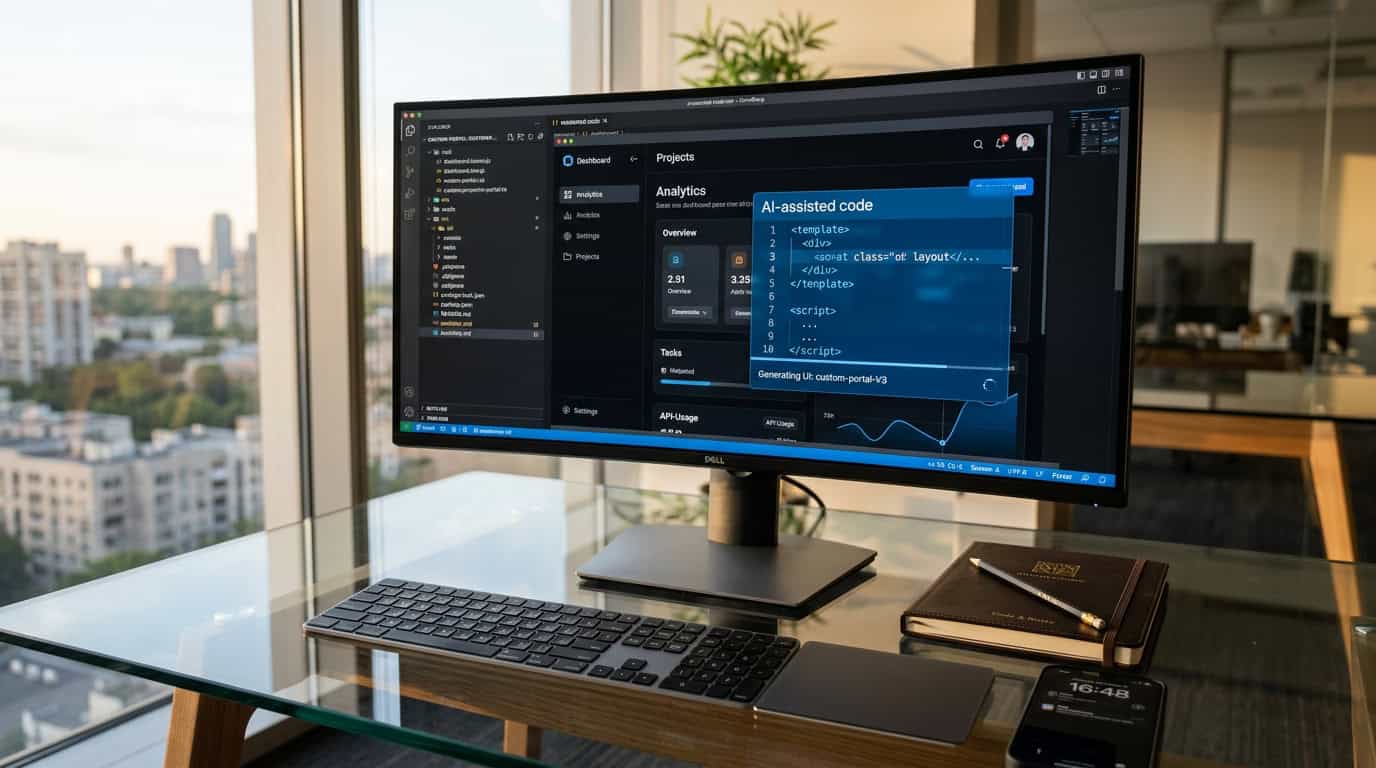
The integration of AI-assisted development has fundamentally altered the financial landscape of custom web portal projects by streamlining the most labor-intensive stages of production. By utilizing advanced AI coding assistants and automated testing frameworks, engineering teams are now reducing traditional development timelines by approximately 30 percent. This efficiency gain is particularly impactful for enterprise-level portals that require complex authenticated environments and multi-tenant architectures. Instead of billing for hundreds of hours of manual boilerplate coding, professional development teams can now focus high-value human expertise on architectural integrity and custom logic. These time savings translate directly into more competitive project quotes, allowing organizations to secure sophisticated portal features that were previously cost-prohibitive.
Modern development workflows leverage AI to accelerate front-end component generation and back-end API integrations, which are often the primary cost drivers in portal development. For mid-range and enterprise-grade solutions, this technological shift means that a budget once reserved for basic functionality can now encompass advanced features like automated data processing or headless CMS configurations. For instance, the time required to build and secure complex user roles or integrate ERP systems has shrunk significantly, lowering the entry price for high-performance stacks. Clients benefit from this shift through reduced hourly billing and faster deployment cycles, ensuring a quicker return on investment for their digital infrastructure.
As 2026 progresses, the cost-to-value ratio for custom web portals continues to improve as AI tools handle increasingly complex debugging and optimization tasks. This evolution allows developers to pass significant cost savings directly to the client budget, making specialized, high-security environments more accessible to growing firms. While enterprise-grade solutions with deep integrations still command premium pricing due to their scale, the baseline cost for these robust systems is being tempered by automated efficiency. Buyers can now expect more sophisticated logic and tighter security protocols within standard pricing tiers. Ultimately, the rise of AI-assisted development ensures that custom portal pricing is driven by strategic value rather than repetitive manual labor.
Primary Cost Drivers For Authenticated User Environments
The financial investment for a high-performance web portal is primarily dictated by the complexity of its multi-tenant architecture and the depth of its data integrations. Enterprise-level environments require sophisticated logic to ensure that data remains strictly siloed and secure between different user groups, departments, or client organizations. This structural complexity adds significant development time compared to standard web applications because every feature must be built with strict permission layers. As of 2026, building these robust authenticated environments often requires a baseline investment starting at 40,000 dollars, with costs scaling upward as the number of user roles and custom workflows increases.
Achieving seamless operational efficiency requires deep integration with existing ERP and CRM systems, which serves as another major cost driver. These integrations are rarely plug and play, often requiring custom API development to synchronize real-time data across legacy software and modern cloud platforms. When a portal must handle complex financial transactions or sensitive customer records, the engineering hours required for secure data mapping and validation can push project budgets toward the 100,000 dollar range. Furthermore, the shift toward headless stacks and AI-integrated features ensures high performance but demands a more specialized team of developers.
Modern enterprise portals are increasingly moving toward headless architectures to provide the speed and flexibility required for high-traffic environments. This decoupled approach allows for faster load times and better security, though it necessitates a higher upfront cost for specialized front-end and back-end synchronization. Investing in this high-performance stack ensures the platform remains scalable as user volume grows, protecting the initial capital expenditure over the long term. For organizations requiring top-tier security and advanced AI-driven personalization, total project costs frequently exceed 400,000 dollars to account for the rigorous testing and infrastructure demands of a truly enterprise-grade solution.
Long Term Maintenance And Scalability Expenses

Building a high-performance web portal is a significant investment, but the long term financial commitment to cloud hosting and infrastructure is what ensures the platform remains viable as user traffic grows. For enterprise-grade solutions, monthly hosting fees can range from several hundred to several thousand dollars depending on data storage needs and computational demands for AI-integrated features. Scalability expenses are not just about server space, as they also encompass the cost of maintaining high-speed performance across multi-tenant architectures. Investing in a robust cloud environment prevents costly downtime while allowing infrastructure to expand seamlessly alongside business operations.
Post-launch costs also include the critical necessity of regular security patches and feature iterations to protect sensitive authenticated user data. In an environment where cyber threats evolve rapidly, dedicating a portion of the annual budget to security audits and compliance updates is non-negotiable for complex portals. Beyond protection, the digital market requires continuous functional improvements to meet shifting user expectations and maintain a competitive edge. These iterative updates ensure that custom integrations with ERP or CRM systems remain stable during third-party software updates. Strategic budgeting for these ongoing requirements transforms a portal from a static expense into a dynamic, evolving asset.
Calculating the total cost of ownership for a custom web portal requires a balance between upfront development fees and the sustained investment needed for security and growth. While entry-level portals might serve immediate needs, enterprise-grade environments demand a more comprehensive budget to support advanced integrations and high-volume user roles. Aligning technical investment with long term business goals by prioritizing a scalable architecture from the very beginning is recommended. By viewing a portal as a strategic tool rather than a one-time purchase, organizations can ensure that digital infrastructure delivers consistent value and stays ahead of the technological curve.
Strategic Budgeting for Custom Enterprise Portals
Navigating the complexities of custom web portal pricing requires a strategic understanding of how AI integration, security protocols, and multi-tenant architectures influence the final investment. As 2026 continues, the cost spectrum remains broad, with entry-level solutions starting around $20,000 while sophisticated enterprise environments frequently exceed the $400,000 mark. Decision-makers must weigh the long-term value of custom workflows and high-performance headless stacks against the initial capital expenditure. By aligning a budget with specific user roles and ERP integrations, organizations ensure that a portal serves as a scalable asset rather than a rigid expense.
The total cost of ownership extends beyond the initial development phase to include ongoing maintenance, security updates, and performance optimization. Understanding why custom web app development is essential for modern scaling helps prevent common website problems that often plague underfunded projects, such as slow load times or poor mobile responsiveness. Enterprise-grade portals demand a higher upfront cost to guarantee the seamless data synchronization and advanced authentication required for modern business operations. Selecting the right development partner and hosting environment is critical to ensuring a custom portal remains secure and efficient as the user base grows.
To ensure an investment delivers maximum value and remains accessible to all users, it is vital to prioritize professional development standards from day one. A specialized approach helps navigate these financial decisions while maintaining technical excellence across the digital ecosystem. To learn more about B2B portal development cost and development, explore comprehensive solutions tailored for high-growth enterprises. By focusing on quality architecture and strategic planning, a thorough discovery phase ensures organizations can build a powerful authenticated environment that drives measurable ROI.
Frequently Asked Questions
1. What is the typical starting cost for a custom web portal?
A streamlined entry-level portal typically starts around $20,000 and can range up to $40,000. These solutions are ideal for basic user interactions and simple data management tasks that require a development timeline of under three months.
2. Why do enterprise-level portals cost significantly more?
Enterprise solutions frequently exceed $400,000 because they require complex architectural needs, advanced AI-integrated features, and high-performance headless stacks. These systems must support multi-tenant environments and deep synchronization with existing CRM or ERP platforms.
3. How do third-party integrations affect my total project budget?
The depth and complexity of third-party integrations are primary drivers of the bottom line. Seamlessly connecting a portal to external tools for advanced data processing and custom workflows requires more intensive development time and specialized expertise.
4. What features are included in a mid-range web portal?
Mid-range portals generally cost between $40,000 and $80,000 and offer custom workflows designed for specific business logic. This tier provides a higher level of customization and better integration capabilities compared to entry-level hubs.
5. Is it better to prioritize initial development speed or long-term performance?
Aim to balance initial speed with long-term performance to maximize return on investment. Investing in a scalable and secure platform from the start prevents the need for a total rebuild as the business grows and data needs evolve.
6. How does multi-tenancy influence the pricing of a portal?
Multi-tenant workflows add significant complexity to the architecture, which increases the overall cost. This structure is essential for enterprise-grade solutions that must manage distinct user roles and secure data environments for various departments or clients.
7. What role does AI play in modern web portal development costs?
Incorporating AI-integrated features prioritizes user efficiency but also shifts a project into a higher pricing tier. These advanced capabilities require specialized high-performance stacks to handle complex data processing and automation.