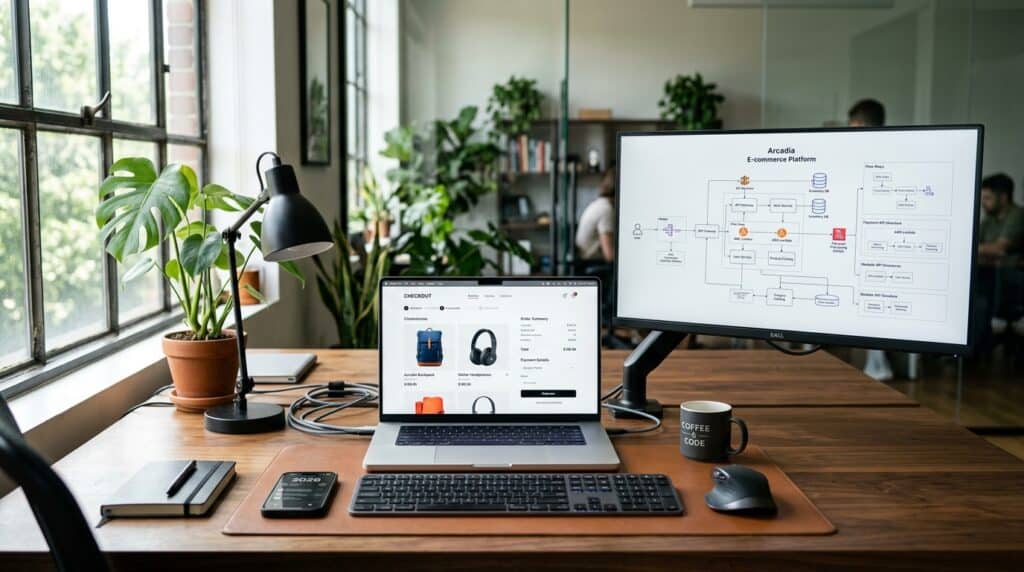
Deciding between Shopify Plus vs custom development in 2026 is no longer just a technical choice; it is a high-stakes strategic pivot. For enterprise brands, the trade-off centers on whether you value rapid speed-to-market or the absolute control of a bespoke architecture. While one path offers a streamlined launch within weeks, the other provides a blank canvas for highly specialized business logic that off-the-shelf solutions cannot replicate.
The financial implications are equally stark when comparing long-term maintenance against upfront agility. A custom build offers unlimited flexibility but demands a massive investment in security, server scaling, and ongoing developer support. Conversely, modern enterprise platforms now handle flash sale surges and PCI compliance natively, allowing your team to focus on growth rather than infrastructure. Choosing the right path requires balancing your need for unique functionality against the reality of total cost of ownership.
Key Takeaways
- Shopify Plus offers a significant speed-to-market advantage by providing a battle-tested, PCI-compliant infrastructure that allows enterprise brands to launch in weeks rather than the months or years required for custom builds.
- Modern extensibility tools like Shopify Functions and robust APIs have narrowed the gap between SaaS and bespoke development, allowing for complex business logic without the technical debt of a custom codebase.
- The total cost of ownership for custom builds is significantly higher due to the ongoing need for dedicated DevOps teams to manage server scaling, security patches, and infrastructure maintenance.
- Enterprise brands should prioritize a managed platform to ensure seamless scalability during high-volume flash sales and global expansion, unless their core value proposition depends on highly specialized, non-linear proprietary logic.
Speed To Market vs Absolute Architectural Control
Choosing Shopify Plus allows enterprise brands to bypass the grueling infrastructure development phase and move directly into revenue generation. While a custom build requires months of architectural planning, database schema design, and security auditing, Shopify Plus provides a battle tested foundation that is ready for deployment in a fraction of the time. This accelerated timeline is particularly vital for high revenue businesses that need to capitalize on seasonal trends or rapid market shifts. By leveraging a SaaS environment, stakeholders can focus on user experience and conversion optimization rather than the underlying server logic. The ability to launch a fully functional, PCI compliant store in weeks instead of years represents a significant competitive advantage in a fast moving economy.
Total architectural control remains the primary driver for brands with highly specialized business logic that exceeds standard commerce patterns. A bespoke codebase allows for the creation of unique data structures and proprietary integrations that a platform might struggle to accommodate without extensive workarounds. However, this level of customization comes with the burden of lengthy development cycles and the need for a dedicated team to manage ongoing maintenance. Every feature must be built, tested, and secured from scratch, which often results in a deployment timeline that spans several quarters. For businesses with standard retail needs, the trade off for this absolute control is often a delayed return on investment and increased technical debt.
The decision between these two paths ultimately hinges on whether your unique value proposition lies in your software architecture or your product offering. Modern developments in 2026 have narrowed the gap, as Shopify Plus now offers advanced extensibility through specialized functions and robust APIs. This hybrid approach provides most of the benefits of a custom build without the astronomical costs and time requirements of a ground up development project. Enterprise leaders must weigh the desire for a completely proprietary system against the agility of a platform that scales automatically during peak traffic. In most high growth scenarios, the speed to market offered by a managed platform outweighs the marginal benefits of owning every line of code.
Total Cost Of Ownership And Infrastructure Maintenance

When evaluating the total cost of ownership, the most significant divergence between Shopify Plus and a custom platform lies in the transition from capital expenditure to predictable operational costs. Shopify Plus operates as a fully managed SaaS environment, where the platform fee covers global hosting, automatic server scaling, and enterprise grade security protocols. For high growth brands, this eliminates the need for a dedicated DevOps team to manage server uptime or patch security vulnerabilities during peak traffic events. By offloading these infrastructure burdens, businesses can reallocate significant portions of their budget from backend maintenance toward customer acquisition and brand innovation.
Custom builds, by contrast, demand a continuous and often unpredictable financial implications to infrastructure and technical oversight. Beyond the initial development investment, a bespoke architecture requires a permanent team of engineers to manage database performance, security compliance, and manual server scaling. These hidden costs can quickly escalate, as the merchant bears the full responsibility for PCI compliance and the mitigation of cyber threats. While a custom platform offers absolute control over the codebase, the long term financial weight of maintaining that independence often creates a technical debt that slows down organizational agility.
The decision ultimately hinges on whether a business views its e-commerce infrastructure as a utility or a proprietary product. Choosing a managed ecosystem provides a stable, transparent cost structure that scales automatically with sales volume without requiring additional headcount. In a custom environment, every major traffic spike or feature update necessitates manual intervention and rigorous testing, leading to higher labor costs and potential downtime risks. For enterprise leaders, the value of a managed solution is found in the peace of mind that comes from knowing the core infrastructure is resilient, secure, and ready for global expansion without the overhead of a large internal IT department.
Shopify Functions And AI Personalization Capabilities
Shopify Plus has undergone a significant transformation with the introduction of Shopify Functions, effectively closing the gap that once existed between SaaS limitations and bespoke flexibility. In the past, enterprise brands often felt forced into custom builds to accommodate complex discount logic, unique checkout validations, or specialized shipping rules. Today, these functions allow developers to inject custom backend logic directly into the Shopify ecosystem, providing the performance of a native feature with the precision of a custom build. This shift means that high-revenue businesses can now execute sophisticated business strategies without the immense technical debt and security risks associated with maintaining a completely private infrastructure.
The integration of advanced AI personalization further strengthens the case for Shopify Plus over a fully custom architecture. While a bespoke build offers unlimited control, it also requires a dedicated team of data scientists and engineers to build and maintain the machine learning models necessary for modern predictive commerce. Shopify’s native AI capabilities leverage massive datasets to deliver real-time product recommendations and personalized search experiences right out of the box. For most enterprise organizations, the ability to deploy these high-level optimizations immediately outweighs the years of development time required to build a proprietary AI engine from scratch.
Choosing between these two paths in 2026 ultimately depends on whether your competitive advantage lies in your unique product logic or your underlying software architecture. Custom builds remain the gold standard for businesses with highly specialized, non-linear transaction models that fall entirely outside the scope of traditional retail. However, for the vast majority of enterprise retailers, the extensibility of Shopify Functions provides a more agile framework that supports rapid experimentation. By utilizing a platform that handles the heavy lifting of security and scalability, brands can avoid the costly ecommerce replatforming mistakes that redirect their resources toward customer experience and market expansion rather than server maintenance and core code updates.
Scalability During Flash Sales And Global Expansion
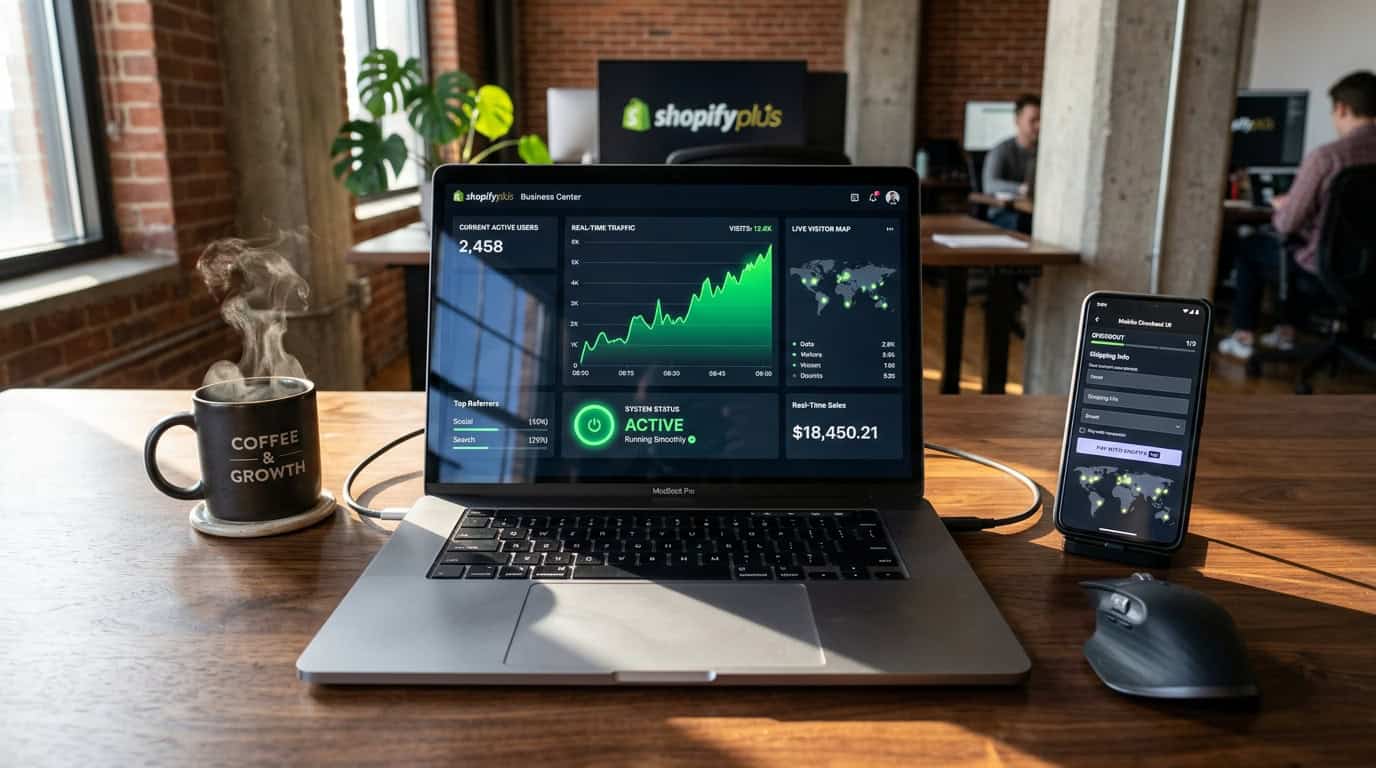
The decision between Shopify Plus and a custom build often hinges on how a brand manages extreme traffic spikes and international growth. Shopify Plus operates on a multi tenant cloud architecture that is engineered to handle thousands of transactions per second without any manual intervention from your team. This native infrastructure eliminates the risk of server crashes during high stakes flash sales or global marketing campaigns where traffic can increase ten fold in minutes. For enterprise brands, this means the technical burden of load balancing and database sharding is entirely outsourced to the platform provider. In contrast, a custom architecture requires your internal engineering team to manually provision servers and optimize code for peak performance, which introduces significant human error risks during critical revenue windows.
Expanding into international markets requires a infrastructure that can adapt to local currencies, languages, and regional compliance standards simultaneously. Shopify Plus facilitates this through a centralized backend that allows for rapid deployment of localized storefronts without the need to replicate the entire codebase. This global readiness is built into the core ecosystem, ensuring that performance remains consistent whether a customer is browsing from London or Tokyo. Custom builds often struggle with this level of elasticity, as each new market expansion might require specific database configurations or localized hosting environments. By leveraging a headless ecommerce architecture, businesses can focus their resources on market strategy and customer acquisition rather than the complexities of global server latency.
To determine if your business falls into the small percentage that truly requires a custom build, you must evaluate if your core value proposition depends on a proprietary logic that cannot be achieved through modern APIs. If your operational requirements involve highly specialized product configurations or deeply complex legacy integrations that a standard SaaS framework cannot support, the custom ecommerce website pricing may be justified. However, for the vast majority of high revenue enterprises, the speed to market and built in security of a premium platform outweigh the architectural ownership of a custom stack. Most brands find that the ability to pivot quickly and scale reliably during peak seasons provides a much stronger competitive advantage than maintaining a unique but costly infrastructure.
Choosing Between Scalability and Total Autonomy
The decision between Shopify Plus and a custom-built architecture ultimately hinges on your specific balance of agility and architectural autonomy. For most high-growth brands in 2026, Shopify Plus offers an unbeatable speed to market and a robust security infrastructure that handles massive traffic spikes without manual intervention. While custom builds provide unlimited freedom for highly specialized business logic, they also demand significant ongoing investment in maintenance, hosting, and security compliance. Choosing the right path requires a deep understanding of your long-term operational costs and the technical complexity of your unique customer journey.
Strategic leaders must weigh the benefits of a managed ecosystem against the necessity of a bespoke codebase that requires a dedicated internal engineering team. Shopify Plus has significantly closed the gap in customization through advanced APIs and functions, making it a viable enterprise solution for all but the most unconventional business models. If your priority is scaling rapidly while maintaining a lean technical overhead, the platform approach is often the superior choice for return on investment. Conversely, if your product requires a completely proprietary engine that cannot be replicated with existing tools, a custom build remains the gold standard for full ownership.
Navigating these complex technical decisions requires expert guidance to ensure your infrastructure supports your growth rather than hindering it. Whether you are looking to migrate to a premium platform or optimize your current digital architecture, our specialized services provide the strategic oversight necessary for enterprise success. We can help you evaluate your specific requirements and determine which path aligns with your revenue goals and operational capabilities. To learn more about how our fractional CTO services for scaling startups can help you with Shopify Plus vs custom decisions, explore our enterprise evaluation guide for high-growth e-commerce brands.
Frequently Asked Questions
1. How do Shopify Plus and custom builds differ in terms of speed to market?
Shopify Plus allows you to bypass the grueling infrastructure phase and launch a functional, PCI compliant store in a fraction of the time. While custom builds require months of architectural planning and database design, this SaaS foundation lets you focus immediately on revenue generation and user experience.
2. What is the primary advantage of choosing a custom architecture?
A custom build provides a blank canvas for brands with highly specialized business logic that off the shelf solutions cannot replicate. This path offers absolute architectural control and unlimited flexibility for unique functionality, provided you have the resources to manage the underlying server logic.
3. Which option is more cost effective for long term maintenance?
Shopify Plus typically offers a lower total cost of ownership because it handles security, server scaling, and compliance natively. Custom builds demand a massive, ongoing investment in developer support and infrastructure management to ensure the platform remains secure and functional.
4. Can Shopify Plus handle high volume traffic spikes as well as a custom build?
Yes, Shopify Plus is designed to handle flash sale surges and high revenue events without the need for manual server adjustments. Unlike a custom build where you must manage your own scaling, the platform provides a battle tested environment that maintains performance during peak periods.
5. When should a brand prioritize custom development over an enterprise platform?
You should choose custom development if your business model relies on proprietary logic or complex integrations that exceed the capabilities of a standardized platform. This is a strategic pivot for brands that value absolute control over the speed and convenience of a hosted solution.
6. How does security and compliance differ between these two paths?
With Shopify Plus, PCI compliance and security auditing are managed by the platform, reducing your internal risk and workload. A custom build requires your team to take full responsibility for security protocols, server hardening, and maintaining global data standards.
7. Does choosing Shopify Plus limit your ability to customize the user experience?
While custom builds offer total control, Shopify Plus provides extensive tools for conversion optimization and front end customization. You can still create a unique brand experience while leveraging a stable backend that eliminates the need for constant infrastructure maintenance.