
Powering over 70% of the modern web, PHP remains the undisputed backbone of digital infrastructure, yet staying ahead of its rigorous version lifecycle has never been more demanding. As security compliance standards tighten in 2026, understanding your total PHP maintenance cost is no longer optional, it is a strategic necessity for business continuity. Whether you are running a streamlined blog or a massive enterprise SaaS, the price of neglect often far outweighs the investment in proactive updates.
Modern development demands a shift from reactive patching to a disciplined, recurring budget model. With professional hourly rates scaling alongside application complexity, small businesses and global corporations alike must manage a wide spectrum of annual expenses to keep their systems secure. Balancing technical debt against performance optimization ensures your application remains resilient in an increasingly volatile economy.
Key Takeaways
- Shift from reactive patching to a disciplined, recurring budget model to avoid the compounding ‘technical debt interest’ that makes delayed upgrades five times more expensive.
- Treat PHP maintenance as a strategic insurance policy, especially in high-compliance sectors like healthcare and fintech where maintenance can consume up to 80% of IT budgets to prevent catastrophic legal and security failures.
- Budget for the mandatory three-year PHP version lifecycle, as a single migration from version 8.2 to 8.3 typically requires 20 to 40 labor hours for code refactoring and regression testing.
- Prioritize structured maintenance retainers over ad hoc hourly repairs to stabilize costs and ensure developers have the deep architectural context needed to prevent system downtime.
Benchmarking Monthly PHP Maintenance Service Tiers
Understanding PHP maintenance pricing is essential for business owners who want to protect their digital assets without overextending their budgets. For personal blogs or simple informational sites, monthly costs remain relatively low because these platforms often rely on standardized updates and minimal custom code. However, as business requirements grow, the investment shifts from basic hosting support to proactive security monitoring and version compatibility checks. Stakeholders should evaluate website maintenance package tiers as a form of insurance that prevents the catastrophic financial loss associated with site downtime or data breaches.
Small to mid sized business applications require a more robust tier of service to handle custom features and third party integrations. In this range, monthly retainers typically cover critical tasks like regular database optimization and patching vulnerabilities within the PHP core or its associated libraries. Pricing at this level reflects the need for a dedicated specialist who understands the specific architecture of the site and can respond quickly to technical glitches. Investing in professional upkeep at this stage ensures that the application remains scalable and compliant with modern web standards as traffic increases.
Enterprise level SaaS platforms and high volume e-commerce stores demand the highest tier of PHP maintenance due to their sheer complexity and zero tolerance for failure. These organizations often require continuous integration and deployment support to ensure that new code does not conflict with existing PHP environments. The cost for these services covers around the clock performance monitoring and the specialized expertise needed to manage legacy code refactoring. By budgeting for these high level service tiers, enterprise leaders can maintain a competitive edge while ensuring their infrastructure remains secure against evolving cyber threats.
Financial Impact Of PHP Version Lifecycle Upgrades
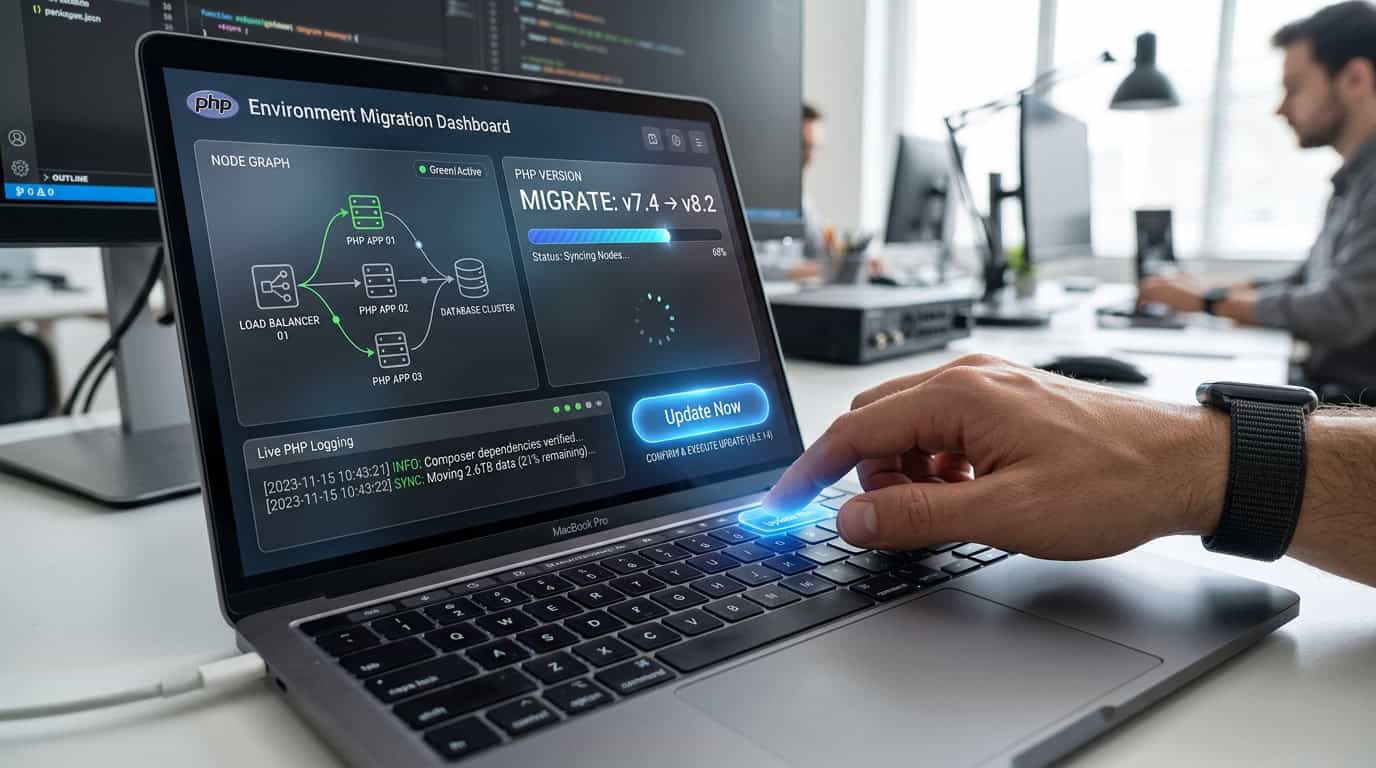
The financial burden of upgrading from PHP 8.2 to 8.3 is rarely about the language itself but rather the labor required to audit and refactor custom code. For a mid-market application, a typical migration cycle can consume between 20 and 40 labor hours to address deprecated functions, update dependencies, and execute rigorous regression testing. At professional agency rates, this single version jump can represent a concentrated investment of several thousand dollars. Business owners must recognize that these updates are not optional, as the three-year version lifecycle of PHP versions creates a hard deadline for security compliance. Failing to budget for these regular transitions often leads to emergency developer interventions that are significantly more expensive than planned maintenance.
Ignoring these incremental upgrades leads to the compounding expense of technical debt, which acts like high-interest financial debt on a company’s balance sheet. When a site falls several versions behind, a simple update transforms into a complex, high-risk reconstruction project that can cost five times more than a standard migration. This backlog of outdated code creates a fragile environment where new features become impossible to implement without breaking existing functionality. Professional maintenance retainers mitigate this risk by spreading the cost of lifecycle management across monthly cycles. By investing in a consistent service partnership, businesses ensure their PHP environment remains performant and secure without the shock of massive, one-time capital expenditures.
Cost Drivers In High Compliance PHP Environments
In high compliance sectors like healthcare and fintech, PHP maintenance is no longer a routine technical task but a core business strategy for risk mitigation. These environments require rigorous adherence to compliance standards such as HIPAA, PCI DSS, and GDPR, which demand constant monitoring and frequent security patches. For organizations operating under these mandates, maintenance spending can often consume up to 80 percent of the total IT budget. This heavy investment is necessary to prevent data breaches that could lead to catastrophic legal penalties and a total loss of consumer trust. Professional PHP retainers in these fields prioritize exhaustive documentation and systematic vulnerability scanning to ensure every line of code meets current regulatory benchmarks.
The cost of inaction in a regulated environment far outweighs the expense of a professional maintenance retainer. High compliance applications require specialized developers who understand how to implement encrypted data handling and secure session management within the PHP lifecycle. Beyond simple version updates, these experts conduct regular security audits and penetration testing to identify potential weaknesses before they can be exploited. This proactive approach transforms maintenance from a reactive expense into a long term value driver that protects the company’s most sensitive assets. By outsourcing these complex requirements to dedicated specialists, business owners can ensure their platforms remain both operational and legally compliant.
Maintaining a legacy PHP application within a high stakes industry involves a continuous cycle of testing and validation. Every minor update must be vetted against strict compliance checklists to ensure that new code does not introduce security regressions. This level of scrutiny requires a significant allocation of labor and resources, as automated tools alone cannot replace the nuanced oversight of an experienced developer. Consequently, the high cost of maintenance reflects the sophisticated expertise needed to manage the intersection of web development and international law. Investing in a high quality service provider ensures that these critical systems stay ahead of evolving threats while maintaining the integrity of the user’s private financial or medical data.
Calculating Developer Hourly Rates For Custom Fixes
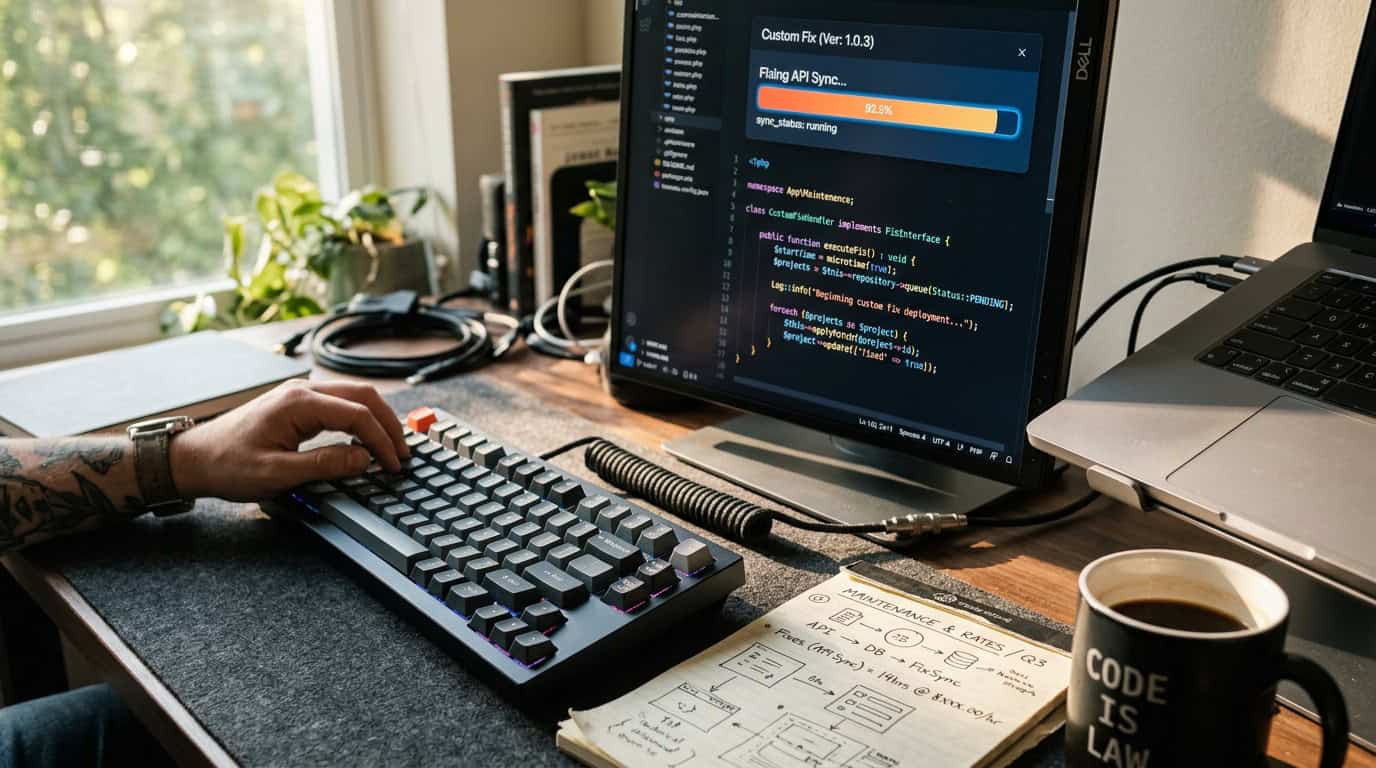
Professional PHP troubleshooting often follows a high-stakes model where emergency hourly rates can quickly drain your annual budget. While hiring a developer on an ad hoc basis for $50 to $200 per hour might seem cost effective for a single fix, these isolated sessions often lack the deep architectural context required for long term stability. Without a comprehensive understanding of your custom application’s history, developers spend billable hours simply diagnosing environmental variables before they can even begin the actual repair. This reactive approach creates a cycle of technical debt where small patches eventually lead to more expensive system failures.
Transitioning to a structured maintenance retainer offers a superior value proposition by stabilizing your monthly spend and ensuring proactive system health. These professional agreements allow a dedicated team to monitor your PHP version lifecycle and security compliance in real time, preventing the very emergencies that trigger high hourly fees. By investing in a predictable monthly service, business owners shift the focus from expensive fire fighting to strategic optimization of their custom code. This consistent oversight ensures that your application remains modern and secure, ultimately providing a much higher return on investment than sporadic, high cost repairs.
The true cost of custom fixes is not just the hourly rate, but the potential downtime and lost revenue associated with unexpected site crashes. Professional retainers mitigate these risks by providing priority access to experts who already understand your specific codebase and infrastructure. This familiarity allows for major deployment of updates and patches, significantly reducing the billable time required for complex adjustments. Choosing a long term partnership over emergency hourly support transforms maintenance from an unpredictable burden into a controlled business asset. This strategic alignment ensures your custom PHP application continues to scale efficiently alongside your business goals.
Investing in Proactive PHP Maintenance Strategies
Allocating a consistent budget for PHP maintenance is no longer an optional luxury but a fundamental requirement for protecting your digital infrastructure. As PHP continues to power the vast majority of the web, the risks associated with outdated versions and unpatched vulnerabilities grow more severe each year. Proactive spending ensures that your applications remain compliant with modern security standards while benefiting from the performance enhancements found in the latest version releases. By investing in regular updates, businesses can avoid the astronomical costs and reputational damage that follow a catastrophic security breach or a total system failure.
Long-term scalability depends on the health of your underlying code, making professional oversight essential for any growing enterprise. Neglecting routine maintenance often leads to technical debt, which slows down development cycles and makes future migrations significantly more expensive. Consistent upkeep allows your digital assets to handle increased traffic and complex integrations without compromising on speed or reliability. Partnering with experts ensures that your platform stays ahead of the strict version support lifecycles that define the current development environment. To ensure your backend remains robust and secure, hiring dedicated PHP developers can transform your technical debt into a streamlined, high-performing asset. You can also expert maintenance and support to ensure your CMS-driven platforms remain optimized and secure against emerging threats.
Frequently Asked Questions
1. Why is PHP maintenance considered a strategic necessity for businesses in 2026?
With PHP powering over 70 percent of the web and security standards tightening, proactive maintenance ensures business continuity. Neglecting version lifecycles leads to technical debt and security risks that far outweigh the cost of regular updates.
2. What factors influence the monthly cost of PHP maintenance services?
Your costs are primarily driven by application complexity, the volume of custom code, and the frequency of third party integrations. While simple blogs require minimal investment, enterprise applications demand higher retainers for proactive security monitoring and version compatibility checks.
3. How does maintenance pricing differ for small to mid sized business applications?
Small to mid sized businesses typically require a robust service tier to manage regular database optimization and vulnerability patching. These costs act as essential insurance against the financial loss associated with system downtime or data breaches.
4. What are the risks of using a reactive patching model instead of a recurring budget?
Reactive patching often leads to higher long term expenses and increased vulnerability to security threats. Shifting to a disciplined, recurring budget model allows you to balance technical debt while ensuring your application remains resilient in a volatile economy.
5. Does application performance optimization impact maintenance costs?
Yes, performance optimization is a core component of professional maintenance that helps scale your application alongside user demand. Investing in these updates prevents your system from becoming sluggish and ensures it remains competitive as digital infrastructure evolves.
6. How should I view the return on investment for PHP maintenance?
You should view maintenance as a critical investment in your digital infrastructure rather than a simple expense. When determining if professional website maintenance is necessary, remember it protects your assets from catastrophic failure, maintains security compliance, and ensures your platform can support future business growth.