
A digital storefront is a strategic necessity for streamlining complex wholesale operations. Calculating the b2b portal development cost is a critical first step for leaders aiming to automate manual workflows and enhance client self-service capabilities. Understanding these financial requirements ensures that your digital transformation aligns with long-term scalability and operational efficiency.
Investing in a robust portal goes beyond simple transaction processing; it creates a centralized hub for data-driven decision-making and seamless integration. By evaluating the balance between initial capital expenditure and projected ROI, businesses can build a platform that reduces overhead while strengthening buyer loyalty. This clarity allows stakeholders to prioritize high-impact features that drive immediate value without overextending the budget.
Key Takeaways
- Architectural complexity—specifically ERP/CRM integration and multi-level user permissions—is the primary driver of development costs and essential for operational scalability.
- Choosing between custom builds and SaaS platforms requires balancing high upfront ownership costs against long-term subscription fees and integration limitations.
- Hidden expenses like legacy data migration, third-party API fees, and continuous security audits must be accounted for to ensure an accurate ROI projection.
- Investing in high-level engineering talent and robust backend automation reduces long-term maintenance costs and eliminates expensive manual workflow errors.
Core Features Driving B2B Portal Development Cost
The architectural complexity of a B2B portal is the primary determinant of its total development cost, as high-level automation requires sophisticated engineering. Integrating the portal with an existing ERP or CRM system is often the most significant investment, as it ensures real-time synchronization of inventory, pricing, and order status. This seamless data flow eliminates manual entry errors and accelerates the fulfillment cycle, providing a substantial return through operational efficiency. While basic interfaces are more affordable, the technical labor required for secure, two-way data bridges drive the budget upward. Businesses must view these integration costs as a foundational investment in a operational scalability digital workflow.
Customization of user roles and permissions adds another layer of complexity that influences the final project price. Unlike B2C platforms, B2B environments often require multi-level account hierarchies where different employees have varying levels of purchasing authority. Developing a robust system that manages custom pricing tiers, contract-specific catalogs, and approval workflows requires meticulous backend logic and extensive testing. These features ensure that the portal mirrors the complex organizational structures of corporate clients, fostering long-term loyalty. Although these advanced permission sets increase initial expenditures, they are essential for automating high-value client interactions without manual oversight.
Bulk ordering systems and specialized checkout processes also play a critical role in defining the development budget. Features such as quick-order forms, CSV upload tools, and automated reordering triggers are designed to handle the high-volume transactions typical of wholesale relationships. Implementing these tools requires a focus on performance optimization to ensure the portal remains responsive even during heavy data processing. Furthermore, supporting diverse payment terms like net-30 billing or credit limits necessitates custom financial modules that go beyond standard gateway integrations. Investing in these high-utility features directly impacts the portal’s ability to drive revenue and reduce administrative overhead.
Cost Variables For Custom Versus SaaS Portals
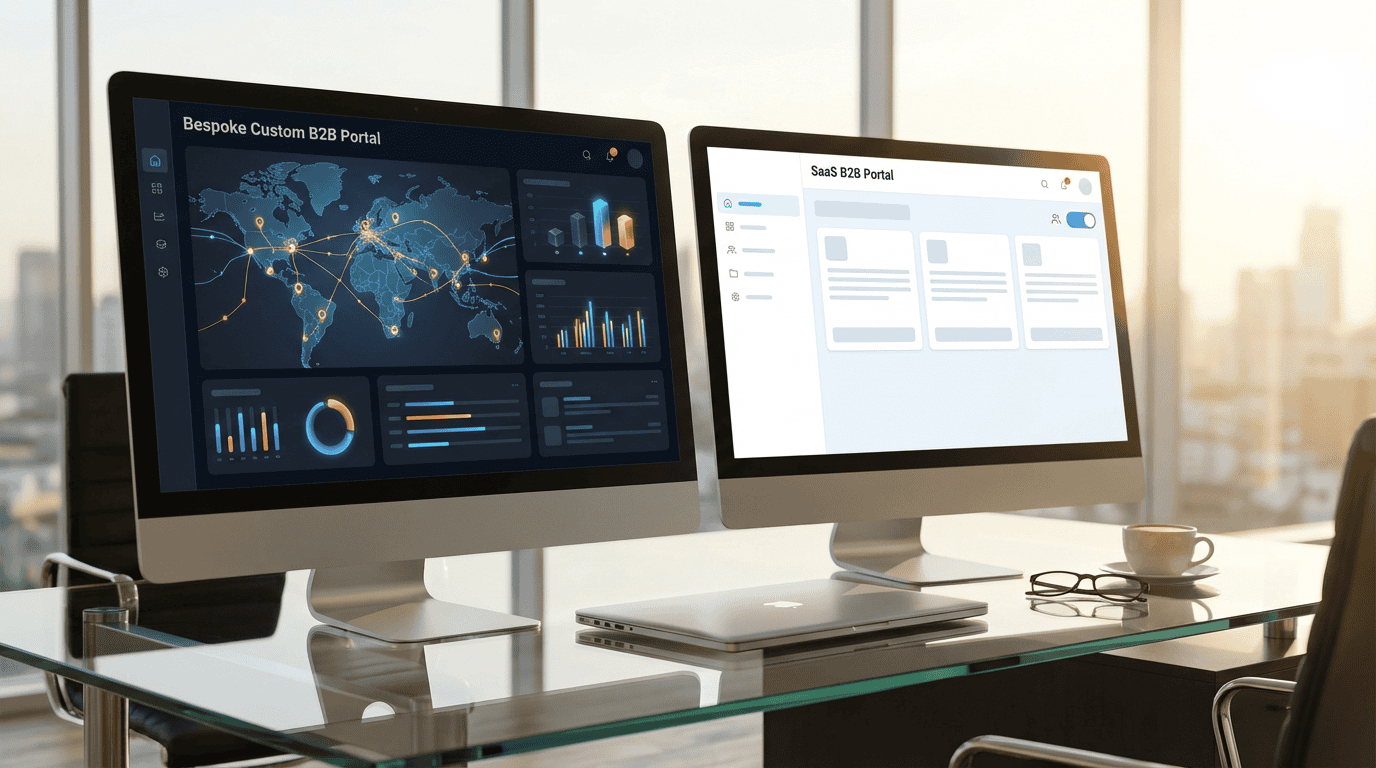
Choosing between a custom-built solution and a SaaS platform is one of the most significant factors influencing your total b2b portal development cost. A custom proprietary interface requires a higher upfront investment because every workflow, integration point, and security protocol is designed from the ground up to match your specific business logic. This approach is ideal for companies with complex internal processes or unique client interaction needs that off the shelf software cannot accommodate. While the initial capital expenditure is substantial, custom development eliminates ongoing per user licensing fees and provides complete ownership of the intellectual property.
Subscription based SaaS solutions offer a lower barrier to entry with predictable monthly or annual operating expenses. These platforms allow for faster deployment since the core infrastructure is already built and maintained by the provider. However, the long term costs can escalate as your business scales, often involving tiered pricing based on transaction volume or the number of active users. Furthermore, SaaS models may limit your ability to deeply integrate with legacy ERP systems or customize the user experience beyond standard templates.
Maintenance and evolution costs also differ significantly between these two architectural paths. With a custom portal, your organization is responsible for all security patches, hosting fees, and feature updates, which necessitates a dedicated technical budget. SaaS providers handle the backend infrastructure and security as part of the subscription, offering peace of mind but less control over the update roadmap. Ultimately, the decision rests on whether your priority is immediate cost efficiency and speed to market or long term flexibility and deep workflow automation.
Hidden Expenses In B2B Portal Architecture
While the upfront development labor often takes center stage, data migration frequently represents a significant and underestimated portion of the total B2B portal development cost. Transitioning legacy data from antiquated systems into a modern, structured architecture requires meticulous mapping, cleaning, and validation to ensure business continuity. Organizations often discover that their existing records are inconsistent or incomplete, necessitating manual intervention that can extend timelines and increase expenses. Neglecting the complexity of legacy site migration risks can lead to costly delays during the final stages of implementation.
Beyond the internal logic of the portal, the ongoing financial commitment to third-party integrations and other hidden expenses can impact the long-term budget. Most high-performing B2B interfaces rely on external APIs for real-time shipping rates, tax calculations, or payment processing, all of which typically carry recurring licensing or per-transaction fees. These costs scale as your portal gains traction and user volume increases, making it essential to forecast these operational expenses during the initial planning phase. Failing to account for these external dependencies can result in a distorted view of the platform’s actual return on investment over its lifecycle.
Securing a private client interface also demands a continuous financial investment in rigorous compliance audits and vulnerability testing. Because B2B portals often handle sensitive proprietary pricing and bulk procurement data, they are high-value targets that require more than just basic encryption. Regular security assessments and updates are necessary to meet evolving industry standards and protect against emerging threats to your digital infrastructure. These proactive measures are not one-time costs but are essential recurring expenditures that safeguard your corporate reputation and ensure the integrity of your automated workflows.
Estimating Development Timelines And Resource Allocation

The seniority and composition of your engineering team serve as primary drivers for the total project investment. While junior developers offer a lower hourly rate, complex B2B portal architecture often requires the oversight of senior architects who can navigate intricate security protocols and system dependencies. Senior-level talent can significantly compress the development timeline by anticipating technical debt and scaling issues before they become costly bottlenecks. Allocating resources toward high-level expertise typically results in a more robust codebase that reduces long-term maintenance expenses. Ultimately, the balance between speed to market and budget depends on the strategic distribution of these specialized human resources.
The depth of internal workflow automation directly dictates the number of development hours required to reach a functional launch. Automating high-revenue processes, such as complex approval hierarchies or automated contract generation, requires extensive logic mapping and rigorous testing phases. These sophisticated workflows demand more than simple interface design, as they must sync perfectly with your existing business rules and operational constraints. As the complexity of these automated sequences increases, the resource allocation shifts toward backend engineering and quality assurance. Investing in enterprise scalability and connectivity upfront may increase the initial capital outlay, but it delivers substantial ROI by eliminating manual data entry and human error.
Balancing Initial Investment and Long-Term Value
Determining the final B2B portal development cost requires a careful balance between immediate financial outlays and the long-term gains of operational automation. While the initial price tag is heavily influenced by the complexity of ERP integrations and custom user hierarchies, these features are often the primary drivers of a high return on investment. By automating manual client interactions and streamlining bulk ordering processes, businesses can significantly reduce overhead costs and eliminate human error in the supply chain. A well-architected portal should not be viewed merely as an expense, but as a strategic asset that scales alongside your business growth while maintaining high performance.
Selecting the right development path involves weighing the flexibility of custom builds against the speed of standardized platforms. While proprietary solutions offer unmatched control over the user experience and internal workflows, they also demand a more rigorous approach to ongoing maintenance and security compliance. Investing in a robust foundation early on ensures that your digital infrastructure remains resilient against evolving market demands and technical debt. To ensure your investment yields the highest possible value, it is essential to partner with experts who understand the nuances of complex web architecture and long-term scalability.
Navigating the financial complexities of digital transformation is much simpler when you have the right technical leadership guiding your roadmap. Professional fractional CTO services provide the strategic oversight necessary to starting your budget and ensure your portal architecture aligns with your broader business goals. By leveraging high-level technical expertise, you can avoid common pitfalls in the development process and focus on building a platform that drives sustainable revenue. Explore how specialized consulting can help you manage your B2B portal development cost effectively while preparing your organization for a digital-first future.
Frequently Asked Questions
1. What are the primary factors that influence b2b portal development cost?
The total investment is primarily driven by the architectural complexity of the platform and the level of automation required. Integrating your portal with existing ERP or CRM systems and building custom user hierarchies generally represent the most significant portions of the budget.
2. How does ERP and CRM integration impact the overall project budget?
Integration is often the largest cost component because it requires sophisticated engineering to ensure real-time synchronization of inventory and pricing data. While this increases initial expenditure, it eliminates manual entry errors and significantly lowers long-term operational costs.
3. Why is user role customization considered a major cost driver?
B2B environments require complex multi-level account hierarchies that allow different employees to have specific purchasing permissions. Developing these secure, tiered access levels adds technical layers to the project that increase the total development price.
4. Is it possible to reduce costs by choosing a basic interface?
Basic interfaces are more affordable initially, but they may lack the robust automation needed for complex wholesale operations. You should balance initial capital expenditure against the long-term ROI of features that drive buyer loyalty and reduce overhead.
5. How should a business prioritize features when working with a limited budget?
You should focus your investment on high-impact features that provide immediate value, such as secure data bridges and client self-service capabilities. Prioritizing these foundational elements allows you to build a scalable platform without overextending your financial resources.
6. What is the long-term financial benefit of investing in a high-end B2B portal?
A well-developed portal serves as a centralized hub for data-driven decision-making and streamlines complex workflows. This digital transformation reduces manual labor costs and strengthens client relationships through enhanced efficiency, ensuring the platform pays for itself over time.